
Cabinet Refinishing in Alpharetta: What to Check on a Sample Door
Use a representative cabinet door sample to evaluate grain, sheen, recessed details, and color in your kitchen before committing to refinishing.
A Sample Door Answers More Than a Color Question
Cabinet refinishing in Alpharetta involves more than choosing a color from a small chip. For homeowners planning to keep their kitchen for years, a representative sample door can help clarify what the proposed finish will actually look like. It brings together the wood beneath the coating, the door’s shape, the preparation, and the way light moves across the surface.
If a sample is available, evaluate it as a reference for the project rather than a promise that every surface will look identical. The most useful review happens in your own kitchen, beside the materials you intend to keep. Focus on four things: visible grain, sheen, recessed details, and color under everyday lighting.
Choose a Sample That Represents Your Cabinets
Start by asking what the sample represents. An existing door from your kitchen may reveal more than a new piece of smooth wood because it carries the same grain, profile, and previous finish. However, its preparation still needs to reflect the proposed work. A specially prepared display sample is less useful if the rest of the cabinetry will receive a different treatment.
Ask whether the sample uses the intended cleaning, sanding, repairs, primer where needed, and finish coats. For a stained finish, clarify the intended stripping or other preparation and protective topcoat. You do not need to prescribe the process yourself. The goal is to understand whether the sample demonstrates the proposed finish system or simply illustrates a possible color.
Also identify material differences within the kitchen. Solid-wood doors, veneered panels, and previously repaired areas may not respond identically. A door cannot automatically represent a laminate end panel or a face frame with a different coating history. Where those differences matter visually, ask whether an additional test area or sample would make the comparison more dependable.
Decide How Much Wood Grain You Want to See
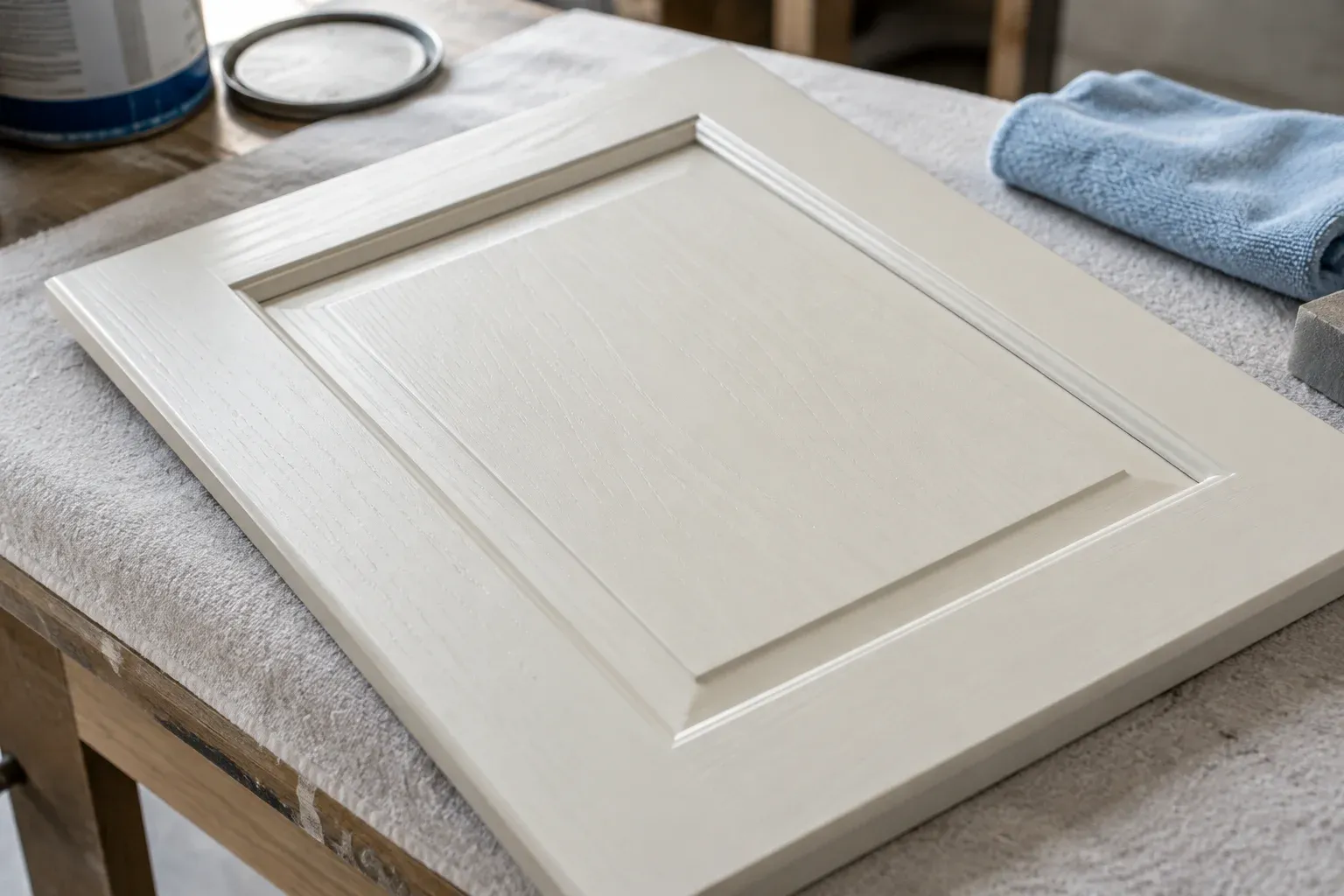
Look at the sample straight on, then move slightly to one side so light crosses the surface. Paint can create an even color while leaving the wood’s texture visible. Oak’s open pores, for example, may remain apparent beneath a painted coating. Decide whether that texture feels appropriate for your kitchen rather than assuming that painted wood will resemble a smooth manufactured panel.
If you want less visible grain, ask whether grain filling is part of the proposed scope and what result is realistic. Filling adds preparation, but it should not be described as automatically erasing every natural feature. With stain, examine differences between the frame and center panel: grain direction and absorption can create variation even when the same stain is used.
Check Sheen and Recessed Details Separately
Sheen affects how strongly the door reflects windows, ceiling fixtures, and under-cabinet lights. Tilt your viewing angle rather than judging only from the front. A more reflective finish can make small surface irregularities easier to notice. Labels such as satin are helpful starting points, but the actual sample is a better visual reference than the name alone.
Inspect the recessed corners, inside profiles, outside edges, and transitions between rails and stiles. Look for clean definition and consistent coverage rather than heavy buildup that softens the shape. Runs, rough patches, or conspicuous accumulations deserve a conversation. Ask which marks reflect the original wood or joinery and which can be addressed through preparation or application.
Remember that appearance does not establish durability by itself. A smooth sample cannot prove adhesion, cleaning resistance, or readiness for daily use. Ask about the coating’s intended cabinet application, curing requirements, and recommended care. Do not scratch, scrub, or apply household cleaners to the sample as an improvised test; that can damage a finish before it has developed its expected properties.
Judge Color Under Your Kitchen’s Actual Lighting
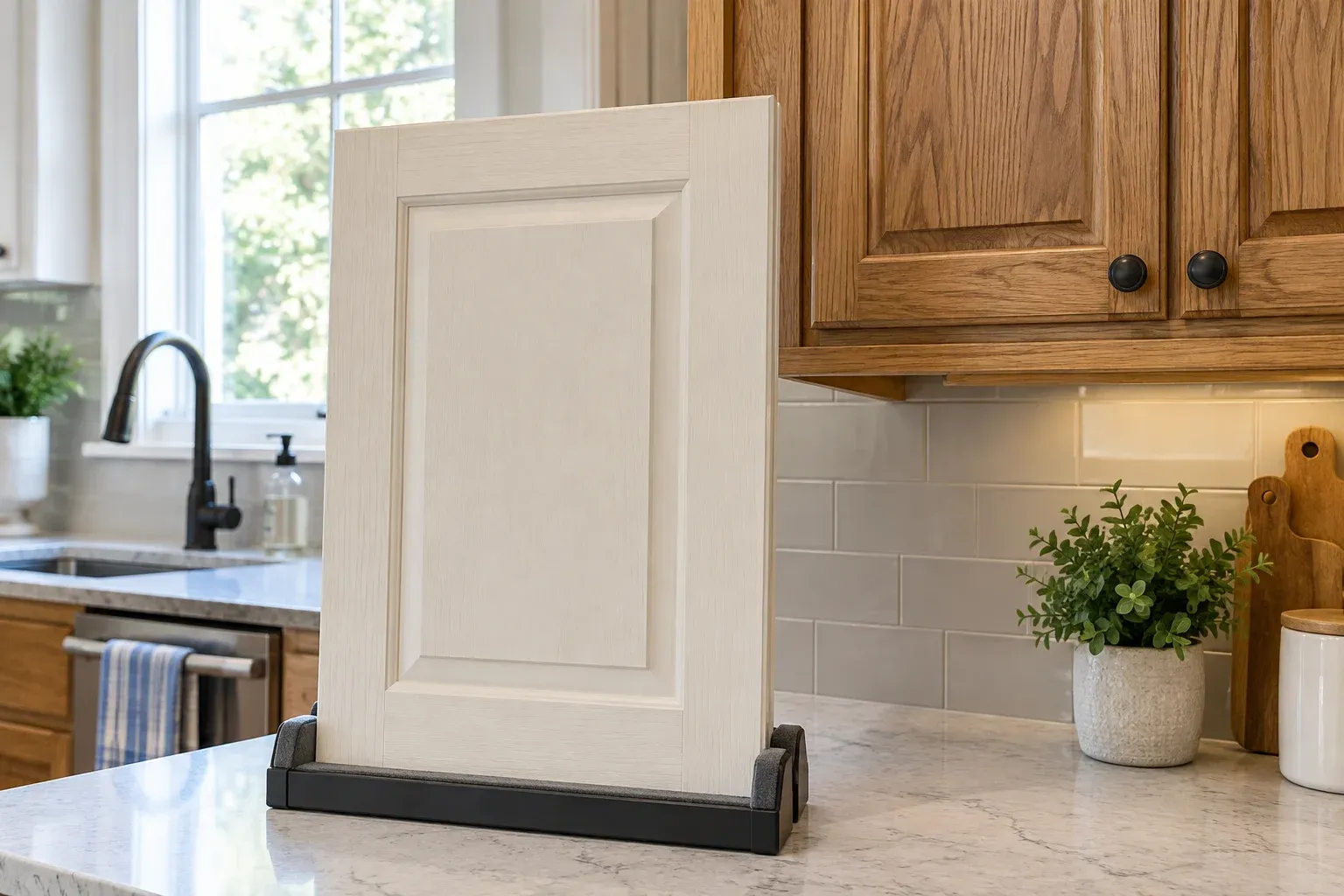
Place the sample upright, as a cabinet door normally sits, using a stable support that protects both the door and countertop. Compare it near the backsplash, flooring, countertop, and hardware. A pale neutral may look warmer beside one material and cooler beside another. Viewing the door flat on a table changes the reflections and may not show its installed appearance.
Review it during daylight and again with the lights you normally use in the evening. Include under-cabinet lighting if it illuminates nearby finished surfaces. If you plan to change bulbs or fixtures, settle that choice before making the final color decision where practical. Phone photographs can help record comparisons, but automatic exposure and white balance make them unreliable for precise color approval.
Clarify How the Finished Cabinets Will Match
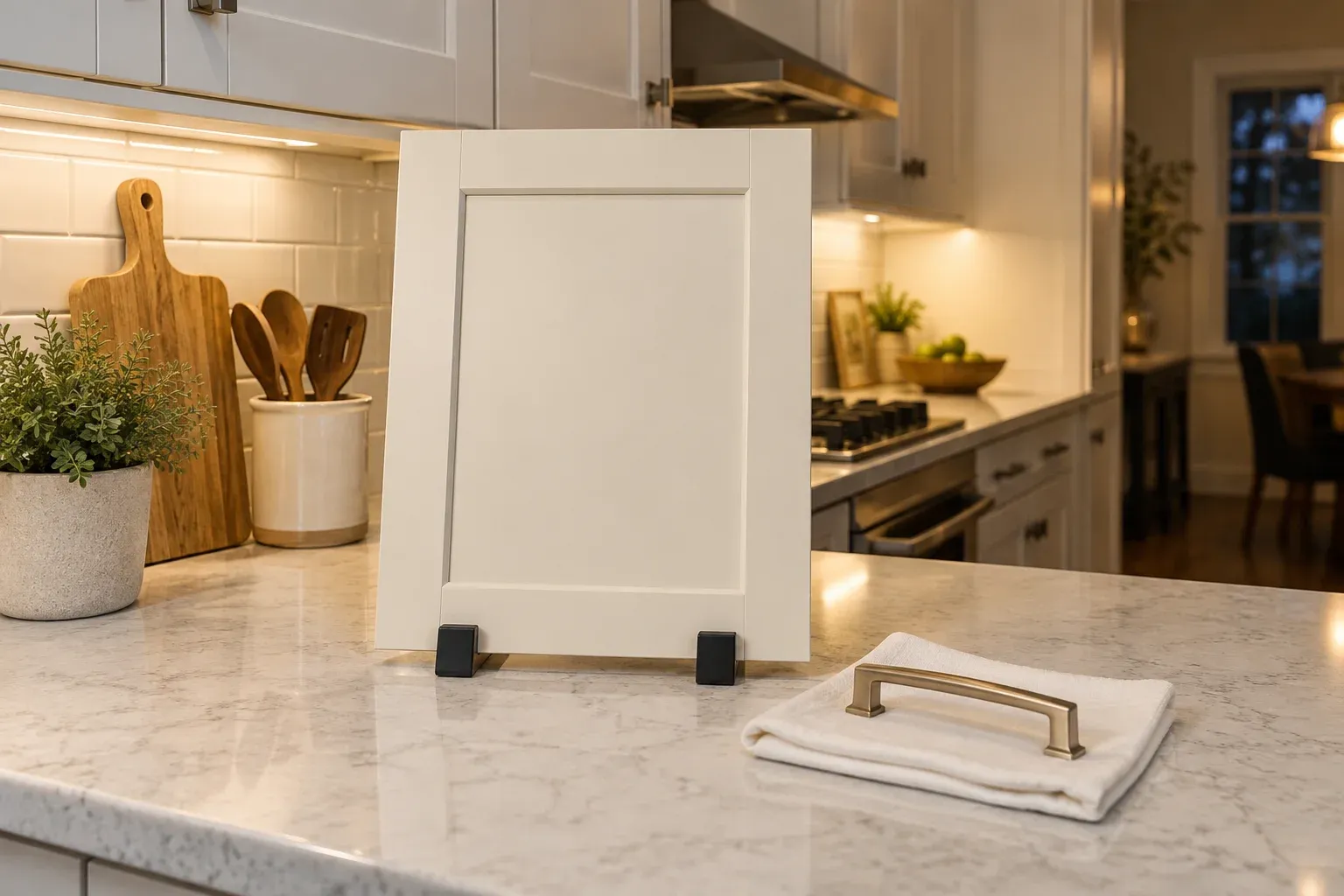
Once the sample looks right, discuss what matching it means. Color, sheen, grain visibility, and application texture are separate characteristics. Ask which should remain consistent across the project and where natural variation is expected. A painted finish may provide more uniform color than stain, but different substrates, repairs, and lighting can still affect how adjoining surfaces appear.
- Will the remaining cabinets receive the same preparation and coating system as this sample?
- Which doors, drawer fronts, frames, and end panels does the sample represent?
- What variation should I expect in grain visibility, color, or sheen?
- How will a noticeable difference from the agreed reference be evaluated?
- Can the finish details and any accepted limitations be recorded with the project scope?
Keep the reference available and record the selected color, product, sheen, and any agreed preparation details. Written notes help distinguish an accepted wood characteristic from a finish concern later. Ask how the sample will be retained and used for comparison; do not assume a particular approval process is included. These are useful planning questions, not a description of this company’s established procedures.
The same approach applies to cabinets in a privately owned office kitchenette or professional practice breakroom: inspect the sample under the lighting and beside the materials where it will be used. Daily cleaning and use expectations also deserve discussion. In either setting, the sample is a visual reference, while the written scope explains the work and its limits.
Make a Better-Informed Refinishing Decision
For cabinet refinishing in Alpharetta, a useful sample review ends with clear expectations—not just a favorite color. Choose a representative door, inspect its texture and details, and view it under your kitchen’s real lighting. Then discuss which features the finished cabinetry should reproduce and where reasonable variation may remain.
When discussing cabinet refinishing in Alpharetta with Alpharetta Painters and Stainers (Paint and Stain), ask whether a representative sample can be included in the proposed scope. Bring your observations about grain, sheen, color, and existing cabinet materials. That gives the conversation a concrete starting point before you commit to refinishing the full kitchen.
Frequently asked questions
Will painted cabinets still show wood grain?
They can. Paint changes the color, but open grain and deeper pores may remain visible, especially on oak. Ask whether grain filling is included and evaluate a sample made with the proposed preparation and coating system.
When should I evaluate the sample door?
Ask when the coating is ready for viewing and safe handling. Then inspect it in your kitchen during daylight and under your usual evening lighting. A coating that is dry to the touch may still need additional curing before normal use.
Can one sample door represent every cabinet surface?
Not always. Doors, drawer fronts, face frames, and end panels may have different materials or conditions. Ask which surfaces the sample represents and whether another sample is needed for a different substrate or finish.