Commercial Painting in Atlanta: Touch Up the Marks or Repaint the Whole Wall?
A practical guide for Atlanta business owners choosing between isolated wall touch-ups, corner-to-corner repainting, and a broader interior refresh.
Start With the Wall, Not the Number of Marks
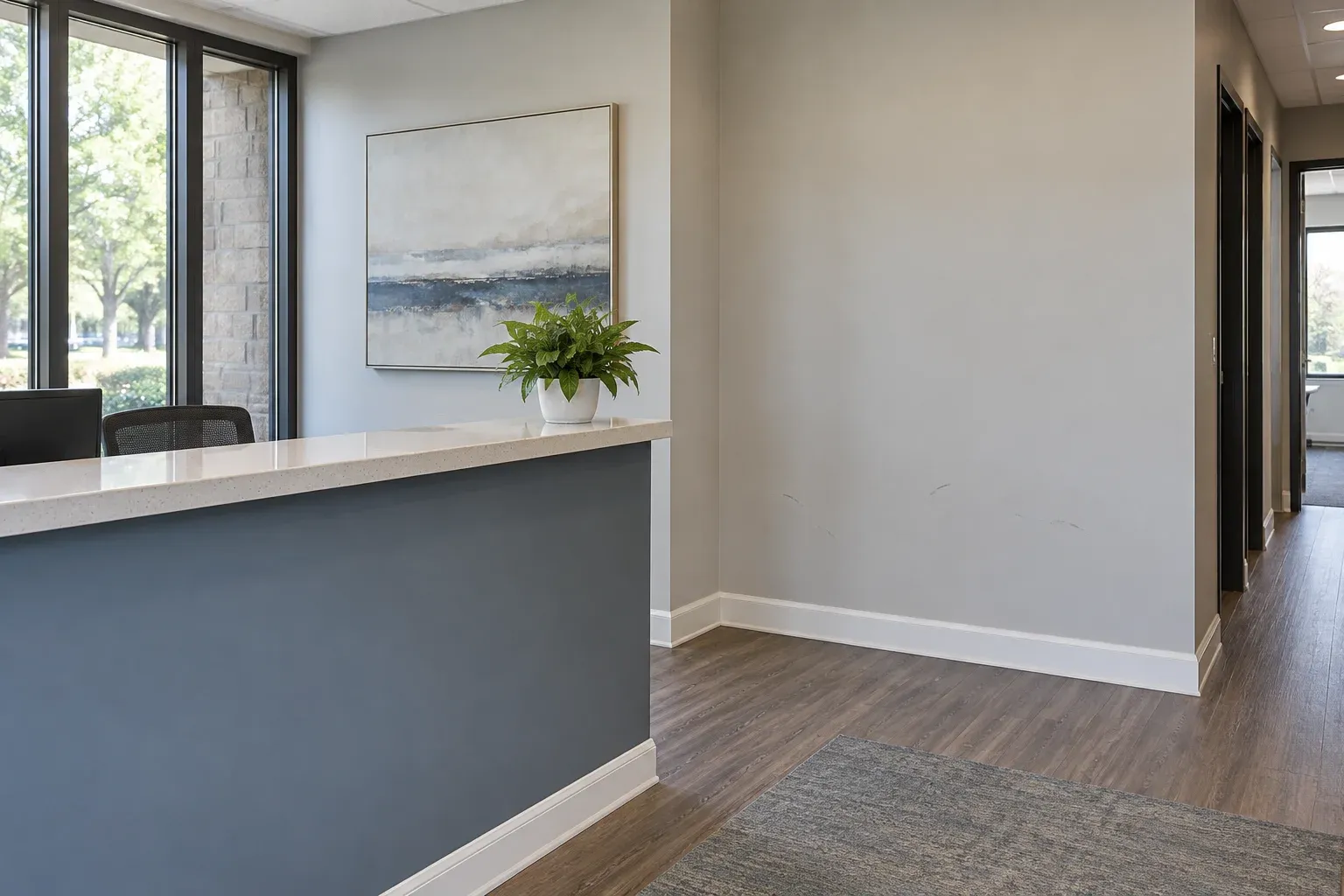
Commercial painting in Atlanta does not have to mean repainting every room because a few walls are marked. For owners of offices, shops, clinics, and other business spaces, the useful question is whether a limited touch-up will disappear into the existing finish—or leave a more noticeable patch than the original scuff.
Start with the finish you need, then choose the smallest scope likely to achieve it. A lightly marked storage wall may tolerate an isolated correction, while a reception wall deserves closer scrutiny. This commercial painting guide compares touch-ups, corner-to-corner repainting, and broader updates without assuming that every surface needs the same treatment.
When an Isolated Touch-Up Is Worth Testing
Before deciding to paint, determine whether the mark is on the coating or has damaged it. Some surface dirt can be removed with cleaning appropriate for the paint product. Test an inconspicuous area first, avoid aggressive scrubbing, and allow the surface to dry. Cleaning that changes the sheen can create another visible spot.
An isolated touch-up is most promising when the surrounding paint is sound, the marks are small, and the original product and sheen are known. Recent, evenly colored paint generally offers a better starting point than a wall with accumulated wear. Still, a matching color name alone does not establish that new paint will blend.
- Check whether cleaning removes the mark without altering the finish.
- Identify the original paint product, color, and sheen when records are available.
- Test one representative area before approving touch-ups across the space.
Sheen and Lighting Can Expose a Good Color Match
Paint sheen describes how much light the finish reflects. A fresh spot can match the wall’s color but reflect light differently, producing a visible halo. Higher-sheen finishes often make these differences easier to see. Lower-sheen finishes may be more forgiving, but that does not guarantee an invisible repair, particularly on an older wall.
Judge a test after it has dried, not while it is wet. View it straight on and from an angle with the space’s normal fixtures operating. In a storefront or window-lined office, check daylight as well. A patch that disappears under diffuse overhead lighting may stand out when sunlight travels across the wall.
Texture and Previous Patches Change the Decision
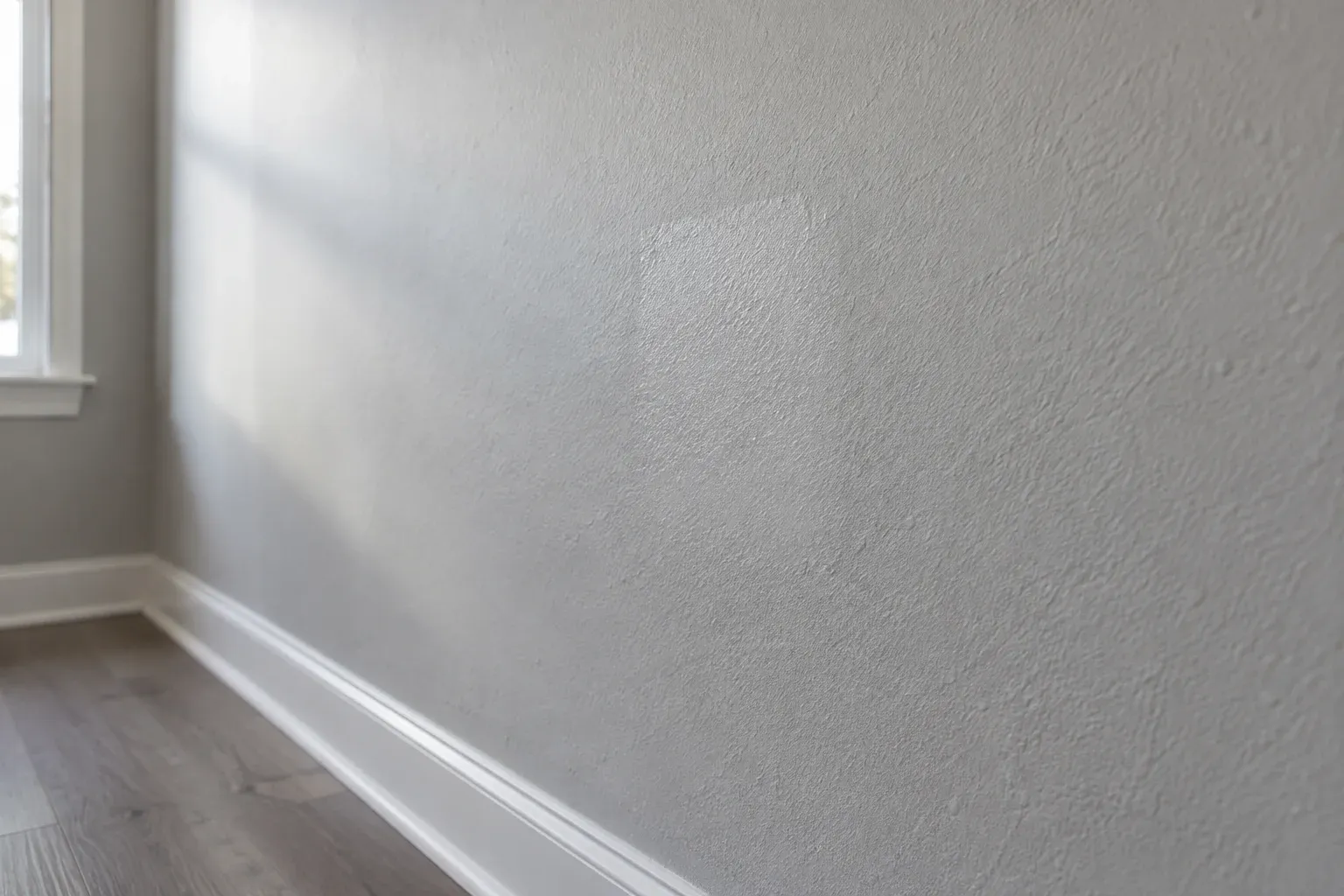
Application texture matters because painted drywall is rarely perfectly smooth. A roller leaves a fine pattern influenced by its cover, paint loading, and application. Brushing a small repair on a rolled wall can introduce a different texture. Using a similar application method improves the starting point, but repeated dabbing can build a conspicuous raised area.
Look for earlier patches before adding more paint. A smooth filled spot surrounded by roller texture can remain visible even after its color matches. Likewise, a ridge at a patch edge casts a shadow under side lighting. Another finish coat does not reliably hide an uneven surface; preparation must address the difference first.
When Corner-to-Corner Repainting Makes More Sense
Repainting from corner to corner is often the practical middle option when touch-ups remain visible. Rather than painting around each mark, the finish covers the full wall plane between clear boundaries. Inside corners, outside corners, and architectural breaks can provide stopping points. An arbitrary stop halfway along a continuous wall is harder to disguise.
This approach suits a meeting-room wall marked by chair backs or a reception wall with several old corrections. It creates one consistent coating across that surface without automatically including the remaining room. However, compare the proposed paint with adjoining walls: new paint may make their fading, discoloration, or different sheen more apparent.
Preparation Should Support an Even Finish
Small damaged areas may need drywall patching before painting. For finish quality, the important steps are making the repair level with the surrounding surface, feathering its edges, removing preparation dust, and using primer where the repair or paint system requires it. Exposed filler can absorb paint differently and leave a dull-looking area.
Keep the preparation scope connected to the coating outcome. Minor dents and patch edges are different from active moisture, loose material, or an unresolved source of damage. Those conditions should be evaluated before repainting proceeds. Paint should not be treated as a way to conceal a problem that continues to affect the surface.
When a Broader Repaint Is Justified
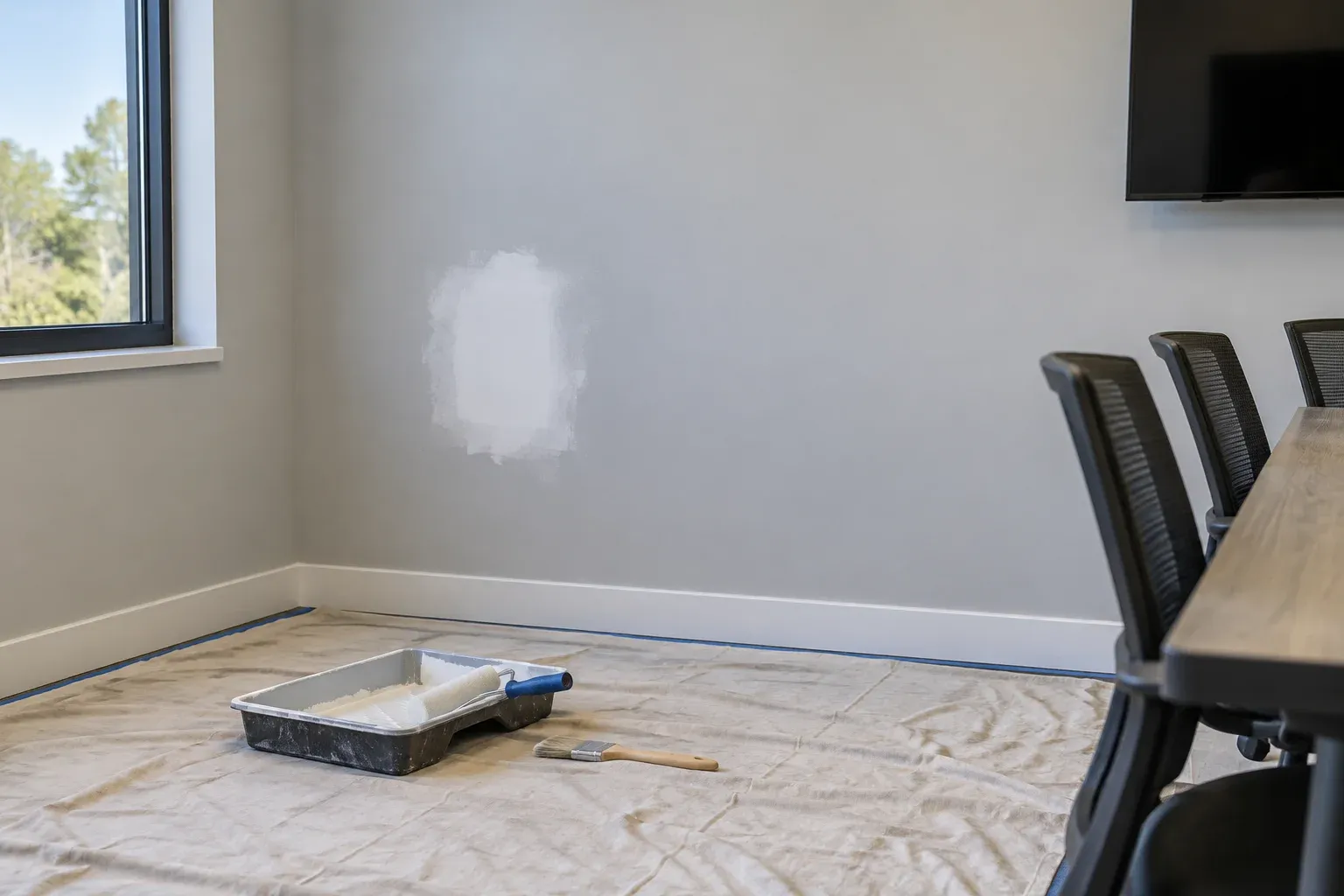
A broader repaint becomes reasonable when several connected walls have uneven wear, numerous patches, or inconsistent coatings from earlier work. Open-plan offices and retail interiors can make these differences especially visible because customers see multiple surfaces together. The decision should follow the condition of those connected surfaces, rather than a blanket rule about repainting entire premises.
Separate appearance priorities from use requirements. A customer-facing clinic reception area may need greater visual consistency than a staff storage room. A restaurant dining wall and a workshop office can also have different cleaning demands. Select sheen for the actual use and maintenance needs, not solely because one finish might make touch-ups easier.
Define a Wall-by-Wall Painting Scope
Walk through the space and identify each wall by room and position, such as “meeting room, window wall.” Assign it a proposed treatment: clean and reassess, test a touch-up, repaint the full wall, or include it in a connected-area repaint. This makes an estimate easier to compare than a vague allowance for miscellaneous marks.
Record the intended paint product and sheen, preparation needs, and stopping points. Clarify whether trim, doors, and ceilings are included or excluded. For occupied businesses, discuss furniture movement, protected equipment, access routes, and when areas can return to use according to the coating requirements. These details define the work without expanding it unnecessarily.
- Name each wall and its proposed treatment.
- Identify preparation, coating selection, and clear paint boundaries.
- State exclusions and access arrangements.
- Agree to assess finish consistency under normal room lighting.
Choose the Smallest Scope That Delivers Consistency
A representative touch-up test can prevent a series of visible corrections. If it blends after drying, limited work may be enough. If color, sheen, or texture remains noticeably different, repainting that wall is a more defensible choice. Expand to adjoining walls only when their condition or the overall view supports doing so.
For commercial painting in Atlanta, aim for a consistent finish where it matters without treating every room as an automatic repaint. To discuss your scope with Alpharetta Painters and Stainers (Paint and Stain), contact the business with wall photos, available paint records, and your priorities for the space. Those details provide a useful starting point.
Frequently asked questions
Will leftover paint always blend with the existing wall?
No. Even the original paint can look different after the wall has aged, been cleaned, or developed wear. Confirm that stored paint is usable, mix it thoroughly, and test a small area. Judge the result only after it has dried under the room’s normal lighting.
Does repainting one wall mean the entire room needs painting?
Not necessarily. Corners can provide practical stopping points when adjoining walls remain in good condition. Compare the proposed finish with those walls first; differences in color or sheen may still be noticeable, especially in open spaces.
What should an Atlanta business owner request in a painting estimate?
Ask for a wall-by-wall scope identifying touch-ups, full-wall repainting, surface preparation, paint product and sheen, and excluded surfaces. Also clarify access arrangements and how the finished walls will be evaluated under the space’s normal lighting.