
Deck Painting in Johns Creek: Planning for Uneven Wear on Floors and Railings
A practical guide to assessing uneven deck wear and defining a repainting scope that treats floors, steps, railings, and sheltered areas individually.
Start With the Deck’s Different Wear Patterns
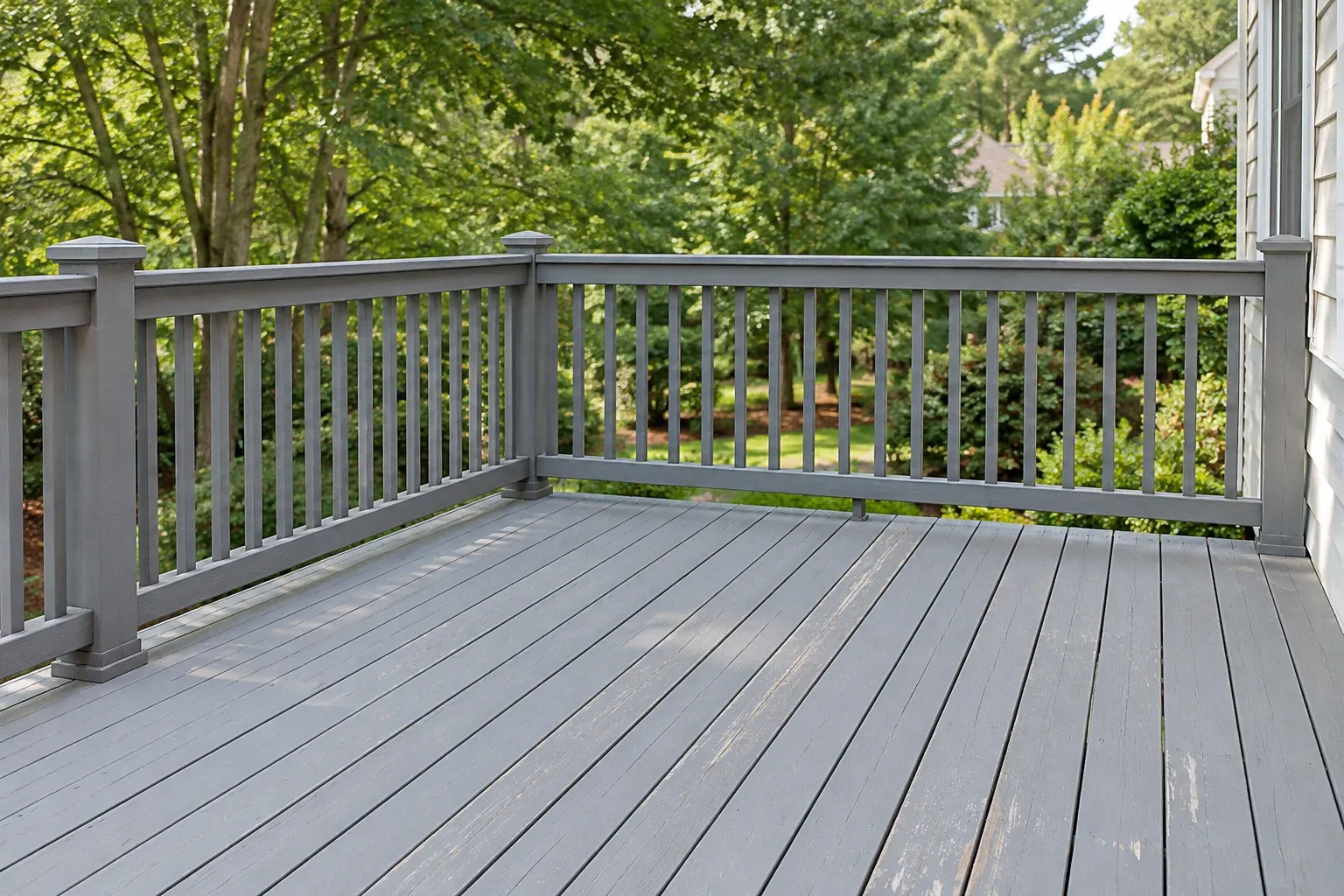
Deck painting in Johns Creek starts with recognizing that one deck can have several different coating conditions. The path from the back door to the steps may look worn, while the balusters still look freshly painted. A shaded corner might stay damp longer than an exposed landing. For a long-term homeowner, the useful question is not simply whether the deck needs another coat, but what each surface needs before that coat can perform as intended.
Planning a deck painting project around those differences helps make estimates more meaningful. A single line reading “paint deck” leaves too much unexplained: which faces are included, where existing paint can remain, and where additional preparation is necessary. Start with a surface-by-surface assessment, then translate the findings into a written scope rather than assuming every component needs identical treatment.
Assess Floors, Steps, and Railings Separately
Walking surfaces receive foot traffic, furniture movement, sunlight, and rain directly. Stair treads concentrate wear along their leading edges and the places people plant their feet. Railings have their own exposure patterns: horizontal top rails receive weather differently from vertical balusters, and hand contact can leave grime even where paint remains attached. Separating these areas makes it easier to distinguish ordinary surface wear from a coating problem that extends across the deck.
Sheltered sections deserve attention too. Paint beneath furniture, near the house, or under a roof may look better because it receives less direct exposure, but appearance alone does not establish readiness for repainting. Dirt, mildew, or lingering moisture can complicate preparation. Walk through the deck with furniture moved where practical, and note the condition of the floor, stair treads, risers, posts, top rails, and balusters individually.
- Map the main walking route and furniture locations.
- Separate stair treads from risers and railing components.
- Compare exposed areas with shaded or sheltered sections.
- Record localized peeling, bare patches, and recurring damp areas.
Distinguish Sound Paint From Failing Paint
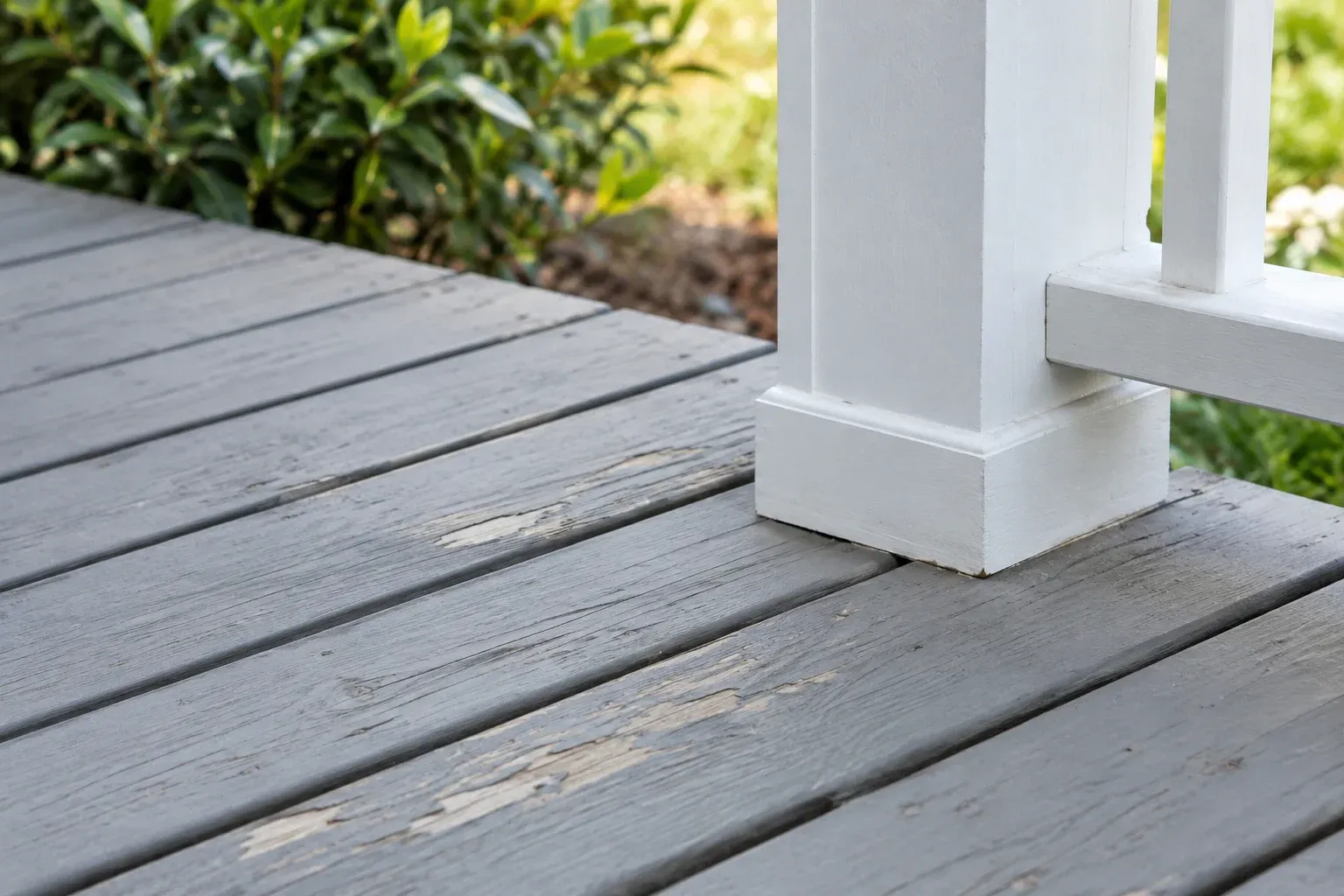
Sound existing paint is firmly attached to a suitable underlying surface. Fading or a dull appearance does not automatically mean that coating must be removed completely. Once the existing finish and its suitability for recoating have been established, cleaning and any preparation required by the selected coating system may allow intact areas to remain. The important distinction is between paint that looks tired and paint that no longer provides a dependable base.
Peeling, lifting edges, and repeated failure in the same places call for closer assessment. New paint cannot restore the attachment of a failing layer beneath it. Localized failure may permit localized preparation, while widespread loss of adhesion can justify broader removal. Before selecting scraping, sanding, or other removal methods, establish what the existing coating is and which preparation approach is appropriate; an unidentified older finish should not be treated as an ordinary repainting surface.
Define Preparation by Area, Not by a General Promise
A useful preparation description connects each task to a surface condition. It might distinguish routine cleaning of intact railings from additional preparation on worn treads or exposed floorboards. Where an appropriate removal method has been established, transitions between retained coating and prepared areas may need smoothing so abrupt edges do not remain prominent beneath the finish. A blanket promise of “thorough prep” is less informative than an explanation of where that work is expected.
Cleaning should remove contamination without treating the wood as indestructible. More pressure is not automatically better, and visibly clean wood is not necessarily ready for coating. Drying conditions, the selected product’s requirements, and any primer needed on exposed areas all affect the next step. The scope should also address protection for nearby siding, doors, landscaping, and adjacent surfaces, while keeping drainage gaps between deck boards open.
Keep Necessary Repairs Separate and Proportionate
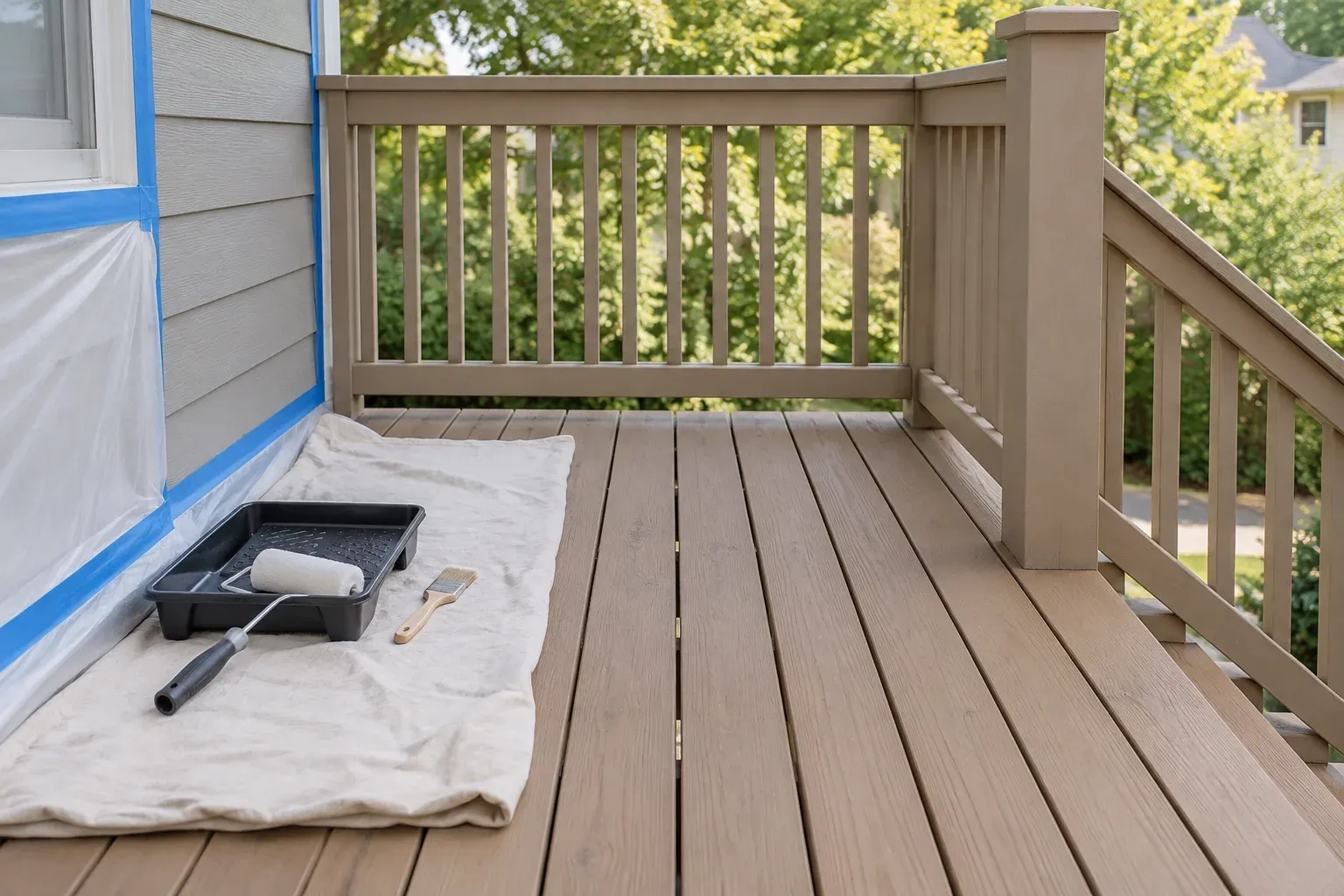
Repairs belong in the discussion when damaged wood would prevent a sound painting result, but they should not take over a repainting project without a clear reason. A split board, deteriorated tread, or loose component is different from faded paint. If assessment identifies a wood repair need, ask for its location and extent to be documented separately so you can understand how it affects the painting scope.
Replacement wood may require a different preparation schedule from surrounding painted material. Its readiness should be assessed rather than assumed because the rest of the deck is ready. Likewise, repeatedly damp areas warrant investigation before they are simply recoated. Keeping these issues separate helps preserve the project’s purpose: repaint the surfaces that are suitable, resolve necessary supporting work, and avoid treating cosmetic paint as a substitute for sound material.
Make Finish Coverage Explicit in the Estimate
Finish coverage has two meanings: the surfaces included in the contract and the coating system applied to them. Specify whether the price covers the floor, treads, risers, railing faces, posts, fascia, and any accessible undersides. Painting the visible side of a railing is not the same scope as coating all accessible faces. Naming those boundaries prevents a disagreement that only becomes obvious when the work appears finished.
Product selection should also distinguish horizontal walking surfaces from vertical components. Exterior trim paint is not automatically suitable for foot traffic. Ask which product is proposed for each area, whether it is compatible with the retained finish, where primer is required, and how many finish coats are included under the manufacturer’s instructions. A uniform color does not require every component to receive an identical product or identical preparation.
- Identify every included surface and any excluded faces.
- Describe preparation separately for intact and failing areas.
- Name the proposed products, primer requirements, and finish coats.
- Separate repair allowances and approval for additional work.
- Clarify protection, cleanup, and return-to-use requirements.
Plan the Schedule Around the Whole Repainting Process
Schedule planning should account for preparation, drying, application conditions, and return to use—not just the day paint goes on. Sheltered sections may dry differently from sunny boards, and a surface that feels dry to the touch may not yet be ready for coating or regular traffic. Ask how product requirements and weather conditions affect the sequence, including access through the back door and use of the stairs.
For deck painting in Johns Creek, the strongest plan matches preparation to actual wear and makes coverage clear before work begins. When discussing your project with Alpharetta Painters and Stainers (Paint and Stain), bring notes about the worn walking path, peeling steps, and better-preserved railings. Request an itemized scope that addresses those differences, identifies exclusions, and explains how additional findings will be handled. That gives a long-term homeowner a practical basis for deciding what to repaint now.
Frequently asked questions
Does peeling paint on the deck floor mean the railings need complete stripping?
Not necessarily. The floor and railings should be assessed separately. Firmly attached, compatible railing paint may be suitable for repainting after appropriate preparation, while peeling floor areas need a different approach. Widespread adhesion failure can justify broader removal, but localized wear alone does not establish that need.
Can the same paint be used on the floor and railings?
Sometimes, but only if the product is approved for both applications and compatible with the substrate and existing coating. A coating suitable for vertical exterior wood is not automatically suitable for a deck walking surface. The estimate should identify the proposed products and where each will be applied.
What should an itemized deck painting estimate include?
Look for named surfaces, preparation requirements by area, the proposed coating system, primer requirements, planned finish coats, exclusions, and any repair allowances. It should also explain how newly discovered preparation needs will be approved and when the deck can return to foot traffic and furniture use.