Driveway Pressure Washing in Brookhaven: Is Your Driveway Ready for Recoating?
A cleaner driveway is not automatically ready for paint. Learn what to check after washing so your Brookhaven driveway’s next finish starts with sound preparation.
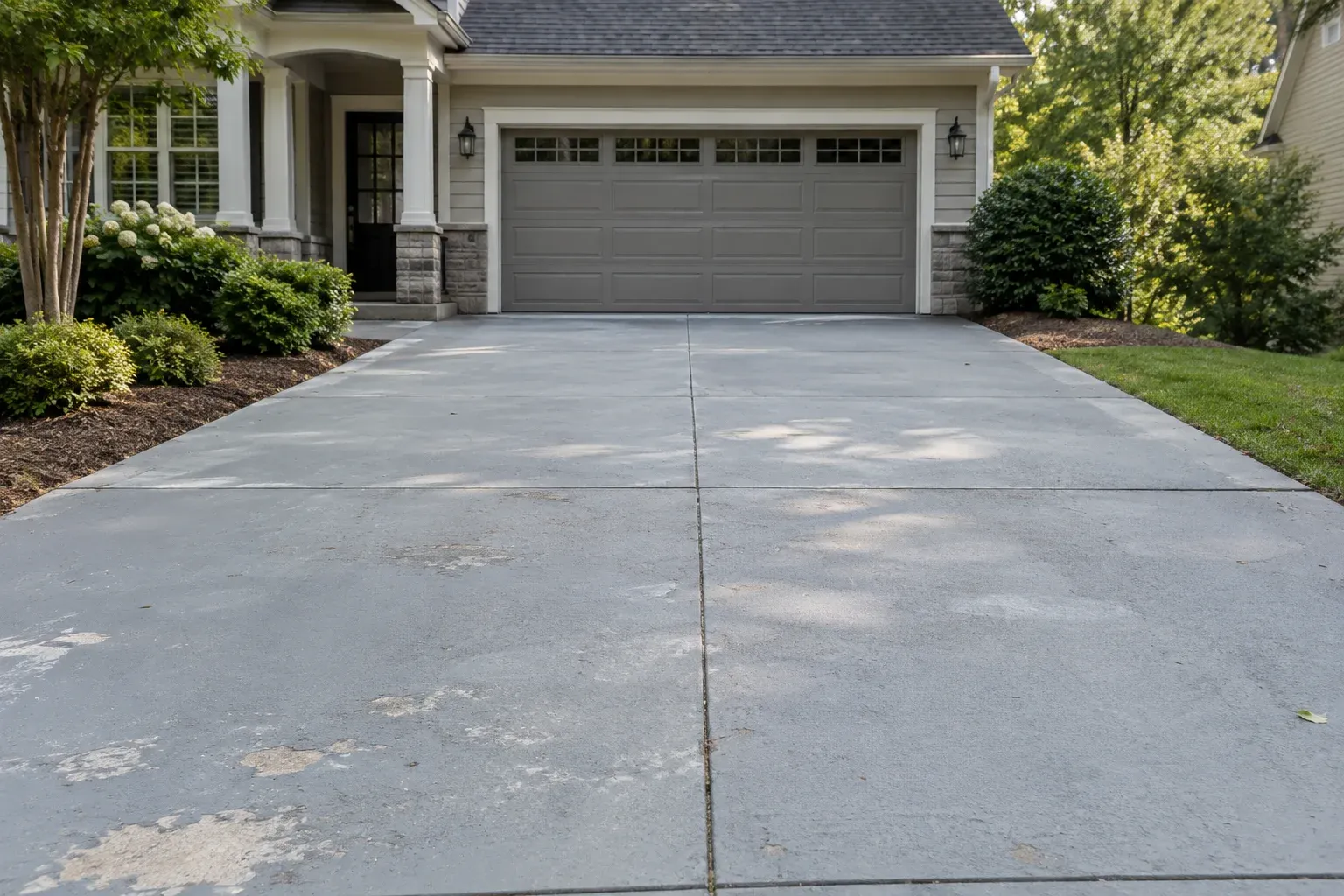
Washing starts preparation; it does not finish it
Driveway pressure washing in Brookhaven can be an important preparation step when you are planning to repaint or recoat concrete. It can remove surface dirt and reveal wear that was difficult to see before cleaning. But a brighter driveway is not proof that a new finish will bond. For homeowners investing in a lasting update, the useful question is not simply whether the driveway looks clean—it is whether the surface meets the chosen coating’s requirements.
Think of washing as one part of the preparation plan, with an inspection afterward rather than an automatic handoff to painting. Existing coatings, oil contamination, weak concrete, and moisture can each require a different response. The driveway pressure washing page is a relevant reference when considering the cleaning stage; decisions about repainting should also account for the actual substrate and the manufacturer’s instructions for the finish you intend to use.
Identify the existing driveway finish
Before cleaning, establish what is already on the driveway. Bare concrete, a penetrating treatment, a concrete stain, and a film-forming paint or sealer do not necessarily accept the same preparation or replacement finish. Start with any saved containers, invoices, or product records. These can be more useful than guessing from color or sheen, especially when a previous owner applied the material or several layers have accumulated over time.
Look for visible film edges, peeling, worn tire paths, and differences between sheltered areas and exposed sections. A colored surface does not automatically mean paint, and water beading does not identify a particular sealer. If the existing treatment remains uncertain, seek product-specific guidance before committing to a new coating. A compatible finish over sound material may be possible; an incompatible treatment may need removal even if it looks intact.
Sherwin-Williams’ surface preparation guidance explains that concrete treatments must be compatible with the coating or removed, and that previously coated surfaces may require a compatibility test patch. This makes identification more than a cosmetic exercise. The new finish will depend on the material beneath it, so leaving an unknown layer in place without assessment can undermine otherwise careful cleaning and application.
Assess what washing reveals
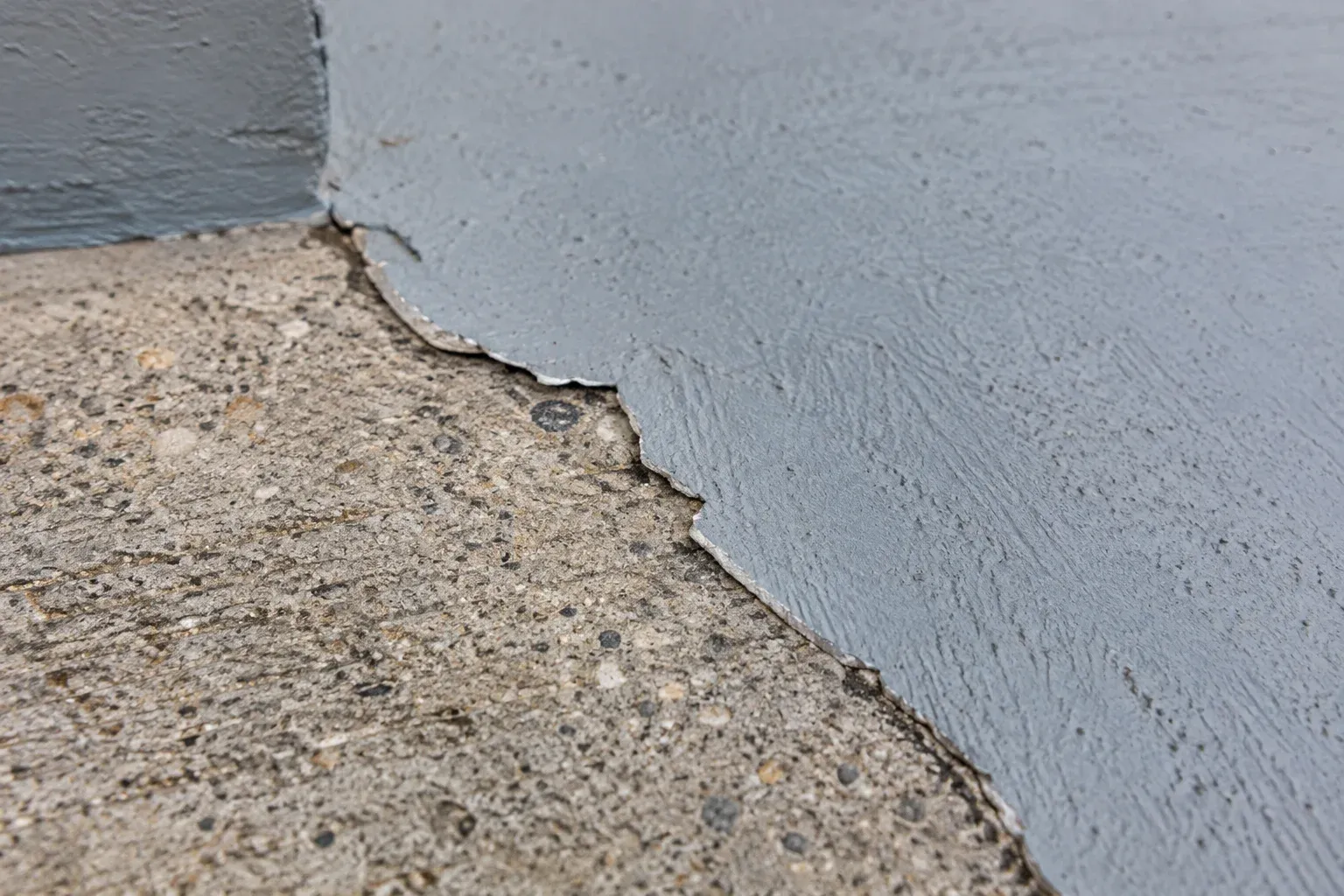
Once surface dirt is removed, inspect the driveway again. Washing can expose peeling edges, powdery areas, small pits, and patches where the old finish has worn through. Those findings help define the next preparation steps. They do not mean that washing has removed every weak layer or created the texture required for a new coating. Cleaning and surface profiling serve different purposes, even when both belong in the same preparation plan.
Avoid treating increased pressure as the answer to every remaining mark. The cleaning approach must suit the concrete’s condition and any finish intended to remain. Excessively aggressive cleaning can damage the surface rather than improve it. Afterward, check whether repairs, additional contaminant removal, or manufacturer-specified mechanical preparation are needed. Sound concrete and firmly attached coating matter more than achieving a uniformly pale appearance across every section.
Separate remaining stains from failing finish
A remaining dark patch and a loose paint edge are different problems. Discoloration may remain within concrete after cleaning, while peeling indicates a layer that is no longer securely attached. Oil-related marks deserve particular attention because visible improvement does not establish that the contamination is gone. Identify the cause of the mark and use the selected coating’s cleaning requirements rather than assuming that everything still visible is harmless staining.
Likewise, painting over loose finish does not stabilize it. Failing material must be addressed, and glossy retained coating may need dulling under the manufacturer’s instructions. Inspect transitions between bare concrete and remaining paint, where raised edges can affect the next finish. White powdery deposits or recurring damp-looking patches also warrant investigation. The goal is a clean, sound, compatible surface—not merely a driveway whose remaining imperfections can be hidden with color.
- Residual discoloration: determine whether contamination remains.
- Lifted or peeling finish: address the failing layer before recoating.
- Glossy retained coating: confirm compatibility and required preparation.
- Recurring deposits or damp patches: investigate the underlying cause.
Confirm moisture conditions before application
Washing adds water, and concrete can look dry at the surface before it meets a coating’s moisture requirements. Shade, humidity, drainage, and subsequent rain all affect the assessment. There is no single waiting period that makes every washed driveway ready. Check the chosen product’s current technical instructions for acceptable moisture conditions and testing, rather than relying on how many hours have passed or whether the surface feels dry.
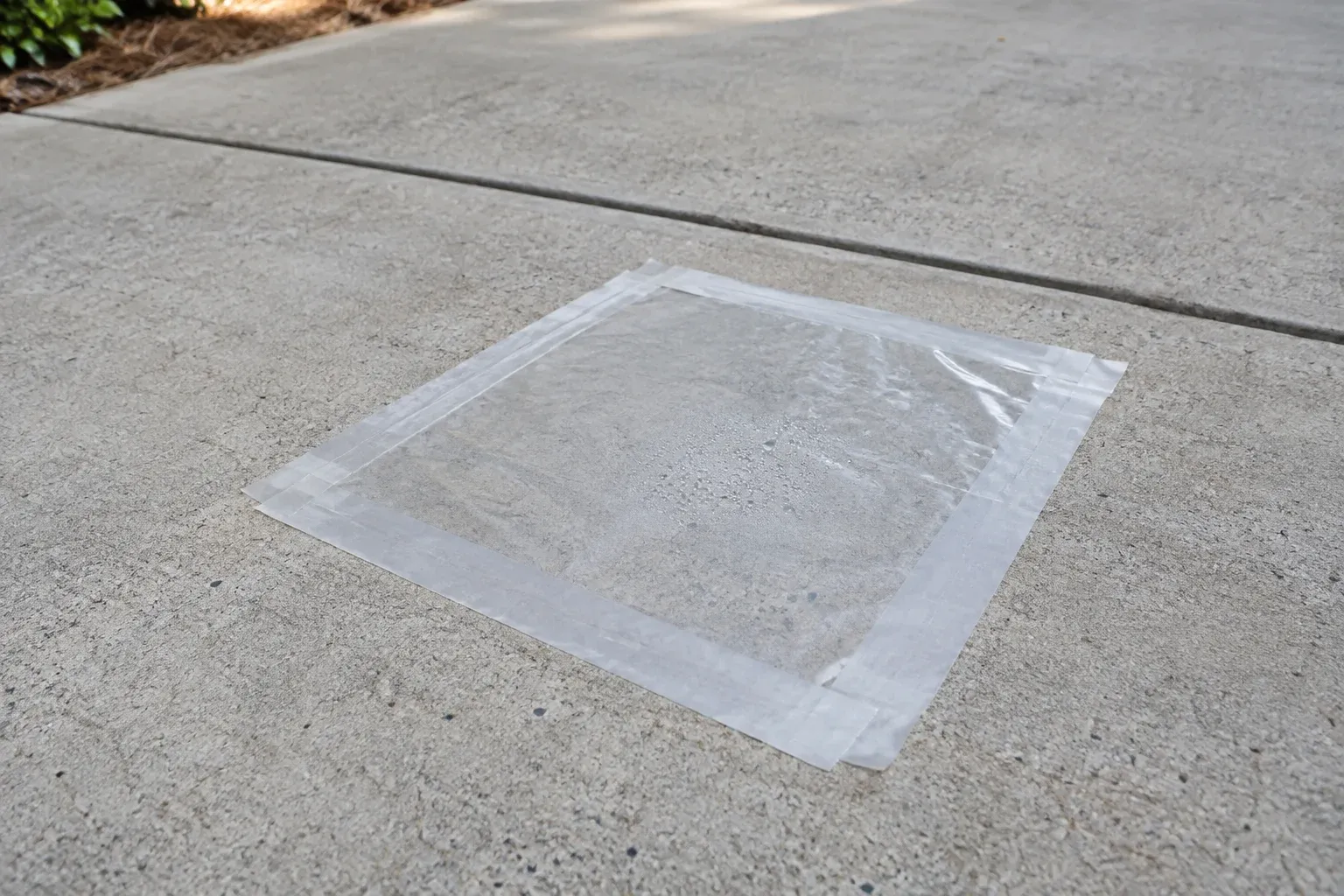
Sherwin-Williams describes a sealed-plastic-sheet assessment on bare concrete: all four edges are taped down, and the sheet is inspected after the specified interval for condensation or discoloration. Its guidance says that detected moisture requires locating and correcting the cause before painting. This is an assessment method, not a universal clearance for every coating; follow any testing method and acceptance criteria required by the actual product you choose.
Let the selected coating determine the next steps
Choose a finish explicitly intended for the driveway’s substrate, exterior exposure, and vehicle traffic. An exterior paint designation alone does not establish suitability for tires. Benjamin Moore’s GarageGuard product page, for example, identifies driveways among its uses and describes resistance to hot tire pickup. That illustrates the kind of use-specific information to check; it is not a recommendation for every driveway or confirmation of compatibility with your existing finish.
Read the preparation requirements before scheduling washing and application. Confirm any required profiling, primer, repairs, moisture assessment, and weather limits. Then plan household access and alternative parking around the coating’s separate foot-traffic and vehicle-traffic requirements. Drying after washing, recoating between paint layers, and returning a car to the driveway are different milestones. If product summaries leave uncertainty, resolve it using the current technical data sheet or manufacturer guidance before work begins.
Move from a clean driveway to a prepared surface
For a long-term homeowner, the practical value of driveway pressure washing in Brookhaven is that it supports a better-informed finish update. Identify the existing treatment, inspect what cleaning reveals, distinguish stains from failing material, and confirm moisture and preparation requirements. Before moving to paint, make sure those findings are reflected in the project scope. A clean driveway is a useful starting point; a sound, compatible, properly prepared surface is what the next coating needs.
Frequently asked questions
Does driveway pressure washing remove all the old paint?
Not necessarily. Washing may remove some loose coating while leaving firmly attached areas or other failing patches behind. Whether the remaining finish can stay depends on its adhesion, compatibility with the new coating, and the selected product’s preparation instructions.
How long should a driveway dry after washing before recoating?
There is no universal waiting period. Follow the selected coating’s drying and moisture requirements, accounting for shade, humidity, rain, drainage, and the condition of the concrete. A surface that looks dry may still require a moisture assessment.
Can I paint over a stain that remains after washing?
Only after determining whether it is residual discoloration or contamination that could interfere with adhesion. Oil, cleaner residue, loose material, and other contaminants need appropriate treatment. A stain’s appearance alone does not establish that the surface is ready.