Drywall Repair in Decatur: Spot Patching or a Full-Wall Skim Coat?
Learn when an old repair needs localized correction, when broader skim coating makes sense, and how to define the painting scope for a consistent finish.

Start With the Cause, Not the Size of the Patch
Drywall repair in Decatur often starts with a familiar frustration: an old patch still shows after the wall has been painted. For homeowners planning to stay, the question is not simply how to cover that rectangle again. It is whether the problem calls for a better localized repair or a thin skim coat across the wall. The right choice depends on what is showing through and how much of the surface is affected.
A visible outline does not automatically mean the entire wall needs resurfacing. The patch may sit slightly proud, dip in the middle, lack the surrounding texture, or absorb paint differently. Sometimes several issues overlap. Separating the surface repair from the painting scope helps you compare estimates without paying for unnecessary work or accepting another touch-up that leaves the same outline visible.
Read the Outline: Surface, Texture, or Sheen?
Look at the wall in ordinary room lighting and when daylight passes across it from a nearby window. Light traveling nearly parallel to the surface can reveal ridges and shallow depressions that disappear under more direct illumination. If the outline casts a slight shadow, the surface likely needs correction. A difference that mainly looks shinier or duller may instead involve paint absorption, application texture, or sheen.
The surrounding wall matters just as much as the repair. A smooth patch on a wall with light stipple can remain conspicuous even when its edges are flat. Repeated coats of rolled paint can also leave a texture that fresh compound does not have. Inspect the full wall rather than only the rectangle, and point out the lighting conditions under which the mismatch bothers you.
When Localized Patching Is Enough
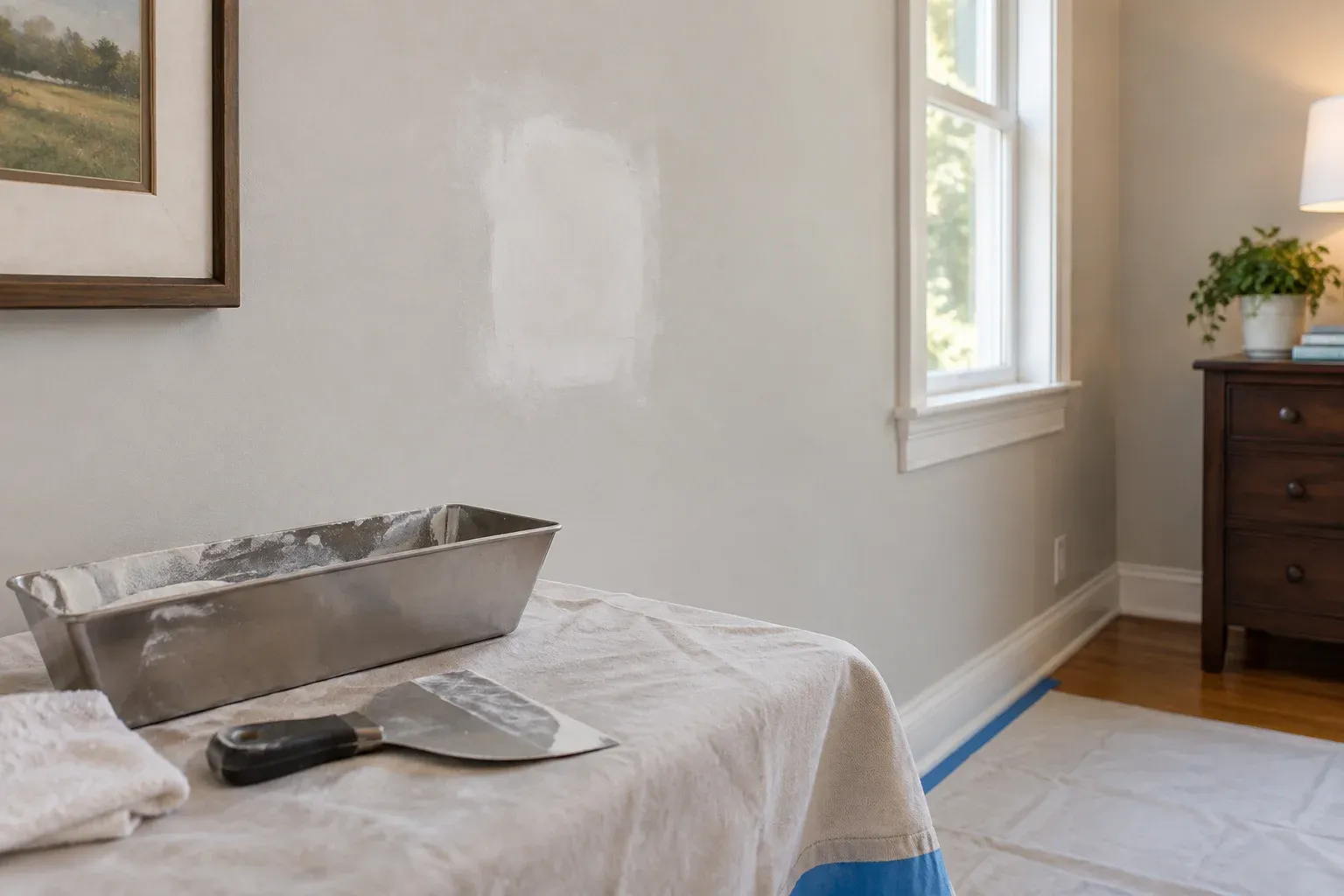
Localized patching is a sensible starting point when the surrounding drywall is sound and the mismatch is confined to one area. Correcting a shallow depression may involve additional compound spread beyond the original repair. A raised edge may require careful reduction before blending. The goal is a gradual transition into the existing wall, not another sharply bounded layer that follows the old patch exactly.
The working area can therefore be noticeably larger than the original hole or damaged spot without becoming a full-wall project. Ask how the edges will be feathered and how the surrounding texture will be matched. A drywall patching scope should describe the finished transition, not just the dimensions of the original damage. Localized work is less persuasive when several nearby repairs have already created overlapping humps and hollows.
When a Full-Wall Skim Coat Makes Sense
A full-wall skim coat applies a thin layer of finishing compound across the wall to create a more uniform surface. It becomes worth considering when old repairs are scattered throughout, texture varies broadly, or isolated corrections would cover much of the wall anyway. It can also suit a homeowner who wants to move from an uneven existing texture toward a smoother painted appearance.
Skim coating is not a substitute for fixing loose tape, unstable material, or the cause of recurring damage. Nor should a thin finish layer be expected to straighten a substantially bowed wall. Those conditions need their own assessment. Broader coating also adds preparation, drying, sanding, and priming work, so an estimate should explain why that scope is appropriate rather than treating it as the default response to any visible patch.
Why Primer and Paint Sheen Affect the Result
New joint compound and an existing painted surface can absorb a finish coat differently. Without suitable priming, that difference may leave a dull or uneven-looking area even after the physical repair is smooth. Primer helps establish a more consistent base, but it cannot flatten a ridge or recreate missing texture. Preparation, texture blending, and priming address different problems; none should be treated as a replacement for the others.
Paint sheen also changes how much the wall reveals. Higher-sheen finishes tend to make irregularities more noticeable, especially beside windows, while flatter finishes can make some differences less prominent. Choosing a lower sheen should not be the only plan for an obvious ridge. Discuss the finish you want before the repair scope is settled so the surface preparation supports that choice rather than relying on paint to disguise it.
Does the Whole Wall Need Repainting?
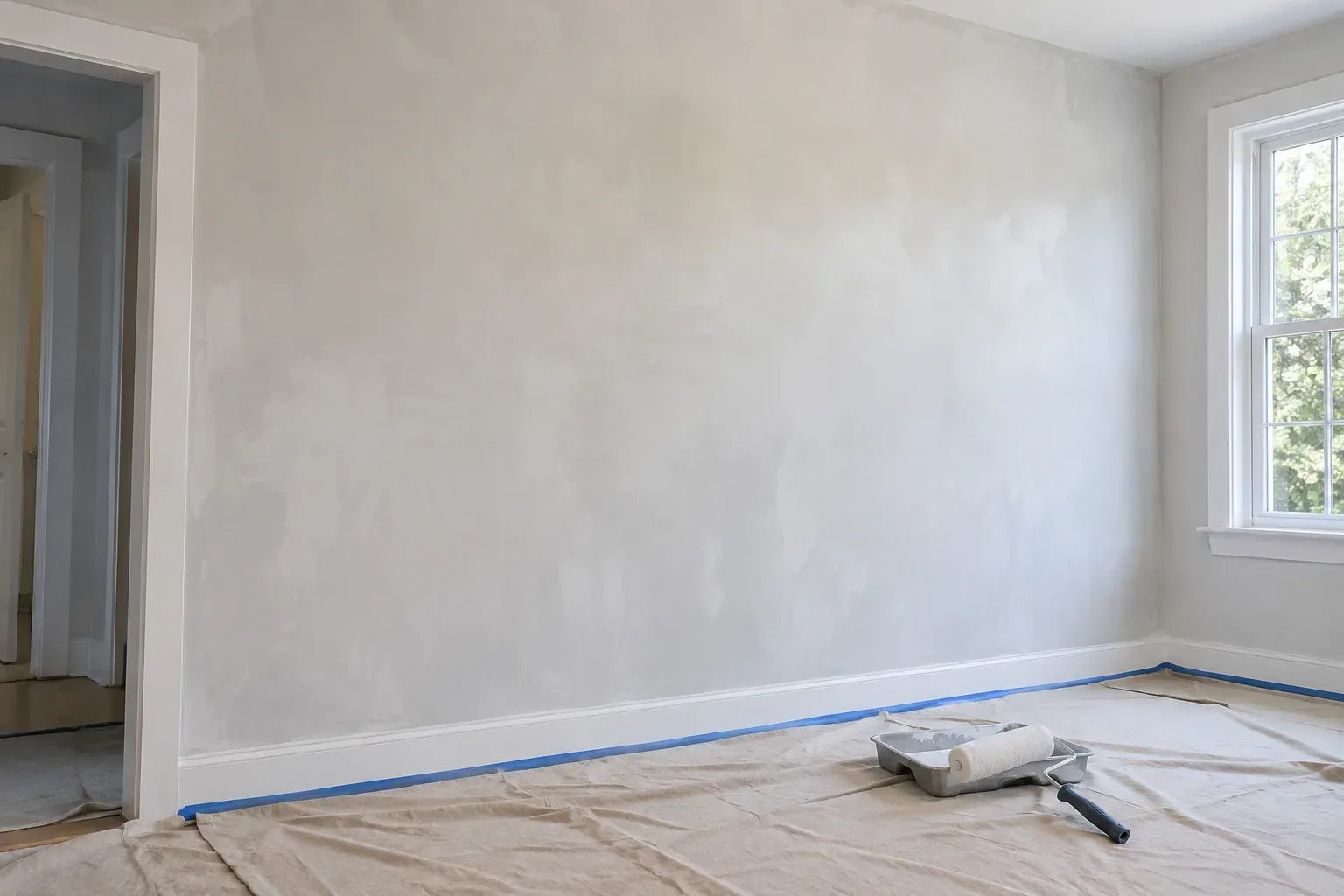
Repairing a small area and repainting an entire wall are separate decisions. A localized correction may be all the drywall needs, while corner-to-corner painting provides a more consistent color and sheen. Touch-ups can stand out because the existing coating has aged or because the new application leaves a different roller texture. Even leftover paint from the original job does not ensure an invisible blend.
Ask whether the interior painting portion covers only the repair, the whole wall, or additional walls in the room. Corners and other natural breaks can provide practical stopping points, but the room layout matters. The same distinction helps owners of small offices and retail spaces compare repair-and-repaint proposals: a limited surface defect does not necessarily justify resurfacing every wall, even when a broader paint boundary is useful.
What to Clarify in a Repair-and-Repaint Estimate
A useful estimate separates the condition being corrected from the steps proposed to correct it. Ask the contractor to identify which outlines need localized work and which walls, if any, need broader smoothing. If the reason for a full-wall skim coat is unclear, request an explanation of why feathering individual repairs would not produce the intended finish. Comparing defined scopes is more useful than comparing totals alone.
Also clarify protection, dust control, cleanup, and how the prepared surface will be checked before painting. In older homes, discuss whether existing coatings need assessment before sanding or other disturbance. These are planning questions, not assumptions about a company's procedures. A written scope helps keep the conversation focused on a durable, consistent appearance rather than an undefined promise that the wall will simply look better.
- Repair boundaries: identify each localized area or the specific wall receiving a skim coat.
- Texture blending: state whether existing texture will be matched or changed.
- Priming: identify the repaired or resurfaced areas included.
- Repainting: name the walls and their stopping points, plus the intended sheen.
- Underlying damage: clarify any separate work needed before surface finishing.
Choose the Scope That Fits Your Decatur Wall
For Decatur homeowners, the best drywall repair scope is the one that addresses the actual defect and supports the intended painted finish. One uneven patch may need careful localized correction; a wall covered in mismatched repairs may benefit from broader skim coating. When discussing a project with Alpharetta Painters and Stainers (Paint and Stain), distinguish those surface needs from priming and repainting. Clear boundaries make it easier to choose appropriate work without assuming every visible outline requires a full-wall skim coat.
Frequently asked questions
Does every visible drywall patch need a full-wall skim coat?
No. An isolated ridge, shallow depression, or texture mismatch may respond to localized correction and wider feathering. A full-wall skim coat becomes more useful when unevenness or mismatched texture is spread across much of the wall.
Can primer hide the outline of an old drywall repair?
Primer can help address differences in absorption between joint compound and the surrounding painted surface. It does not flatten a raised edge, fill a depression, or reproduce missing texture. Those problems need surface preparation before painting.
Will a spot repair require repainting the entire wall?
Not always, but whole-wall repainting often gives a more consistent appearance when existing paint has aged or touch-ups differ in sheen or roller texture. Ask for the repair area and repaint area to be stated separately in the estimate.