
Fence Pressure Washing in Druid Hills: Cleaning Alone or Preparing for a New Finish?
Decide whether your fence needs cleaning alone or preparation for a future finish, with practical guidance on color variation, worn coatings and scope questions.
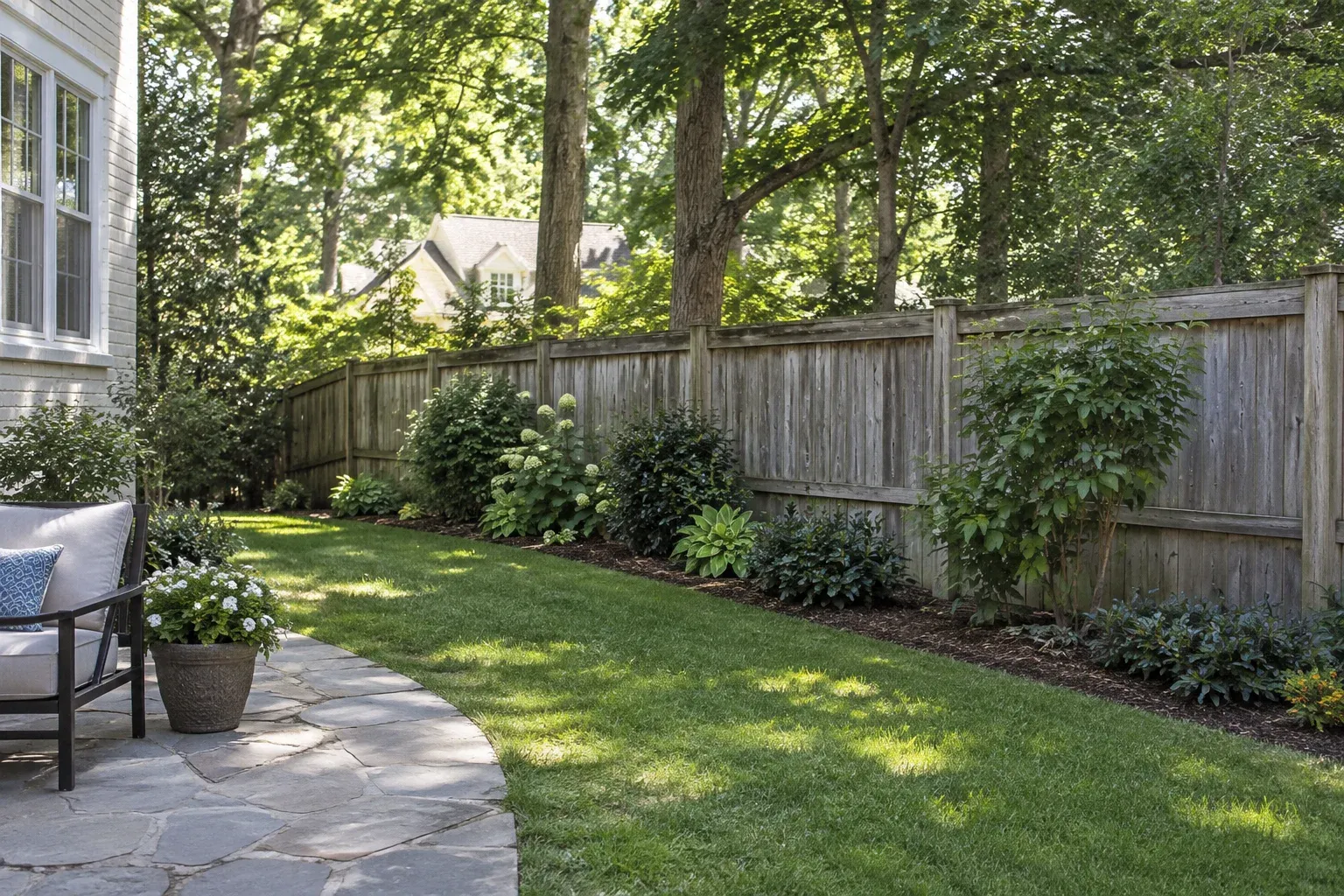
Start with the appearance you want to keep
Fence pressure washing in Druid Hills can serve two different purposes: removing surface buildup from a fence you intend to keep as it is, or beginning preparation for a future paint or stain project. For homeowners planning to stay, the useful question is not simply whether washing will improve the fence. It is whether the appearance left after cleaning will meet your expectations without another step.
A dirty fence and a weathered finish can look similar from across the yard, but they call for different scopes. Washing may reveal attractive wood or a serviceable existing coating. It may also expose faded boards, bare patches and uneven color that dirt partly concealed. Before arranging fence pressure washing, separate the goal of a cleaner surface from the goal of a renewed, consistent finish.
Separate surface dirt from changes in wood and finish
Look at the fence in several places rather than judging only the most visible panel. Dust, splash marks near the ground and greenish surface growth in shaded areas suggest a cleaning need. However, color alone cannot identify the cause of a mark. Discoloration may involve surface contamination, weathered wood, staining around hardware or changes in the coating. An inspection should distinguish these possibilities before promising what washing will remove.
Then examine the existing finish. Peeling edges, exposed wood between coated areas and patches that have lost their original color suggest more than ordinary dirt. If boards were replaced over the years, their age and exposure may differ from the surrounding fence. Those differences can remain after cleaning. A sound fence with removable buildup is a stronger candidate for washing alone than one whose appearance is dominated by a failing finish.
- Surface buildup: ask what can reasonably be removed through cleaning.
- Uneven wood color: ask what variation is likely to remain after drying.
- Worn or peeling finish: ask whether washing is maintenance or only an initial preparation step.
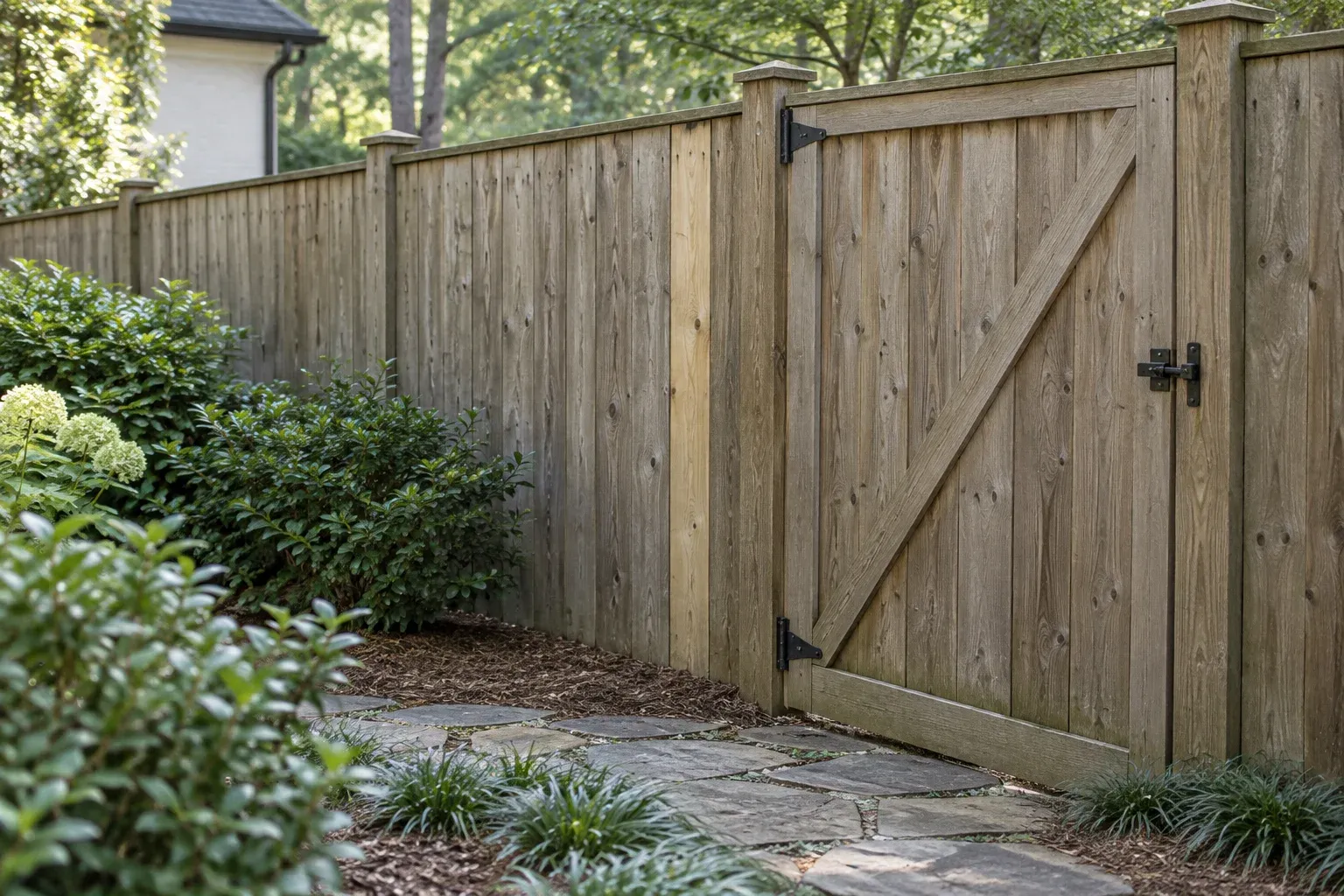
When cleaning can be the complete project
Washing alone makes sense when the fence is structurally sound, its existing finish is reasonably intact and your goal is to remove accumulated grime rather than change its color. It can also suit an unfinished fence when you are comfortable with an aged wood appearance. The acceptable result might be less green buildup and cleaner boards, with some gray weathering and natural variation still visible.
This is a maintenance decision, not a requirement to coat the fence immediately. Nevertheless, washing does not add the protection of a new finish or repair weakened wood. For a long-term homeowner, success means a result you can live with after the fence dries—not an impressive wet appearance on cleaning day. Similar expectations apply to an owner-operated office or clinic with a wood privacy fence: cleanliness and color renewal are separate goals.
Why a clean fence can still look uneven
Wet wood often looks darker and richer than dry wood. That makes an immediate assessment unreliable, especially where shaded boards dry differently from exposed sections. Once dry, the fence may show contrasts between old and newer boards, sheltered areas and sun-exposed faces, or places where stain remains and places where it has worn away. Removing grime can make these existing differences easier to see.
Manufacturer guidance also distinguishes ordinary cleaning from restoration and finish removal. Benjamin Moore’s fence preparation guide identifies different treatments for weathered wood, peeling finishes and contamination-related stains. That distinction matters: a routine wash should not be described as automatically restoring every board to one original color. If gray weathering or old coating dominates the fence, ask whether addressing it would require a separate treatment beyond the proposed cleaning.
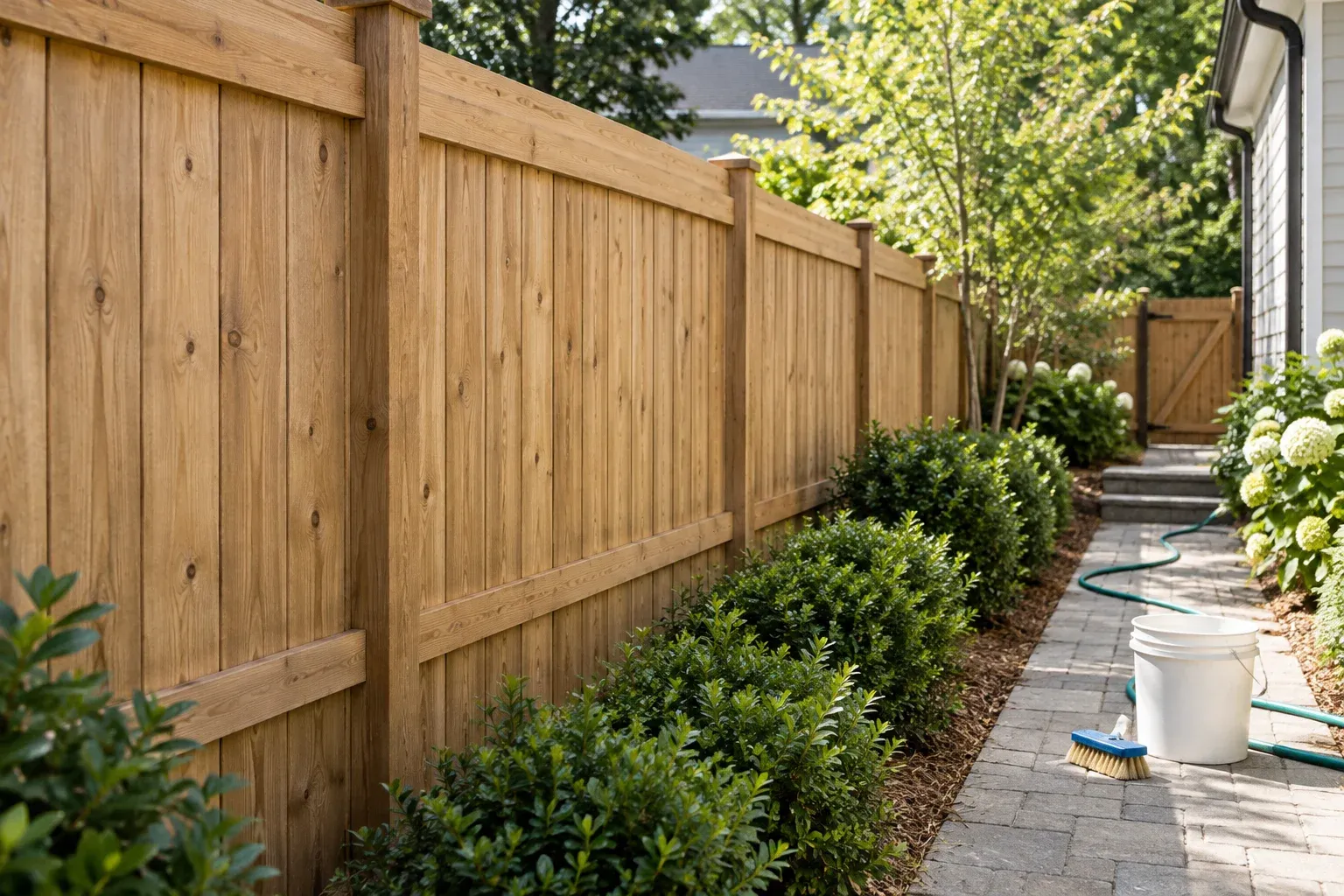
When washing is preparation rather than the endpoint
If your eventual goal is a new finish, explain that before washing begins. Preparation should account for what is already on the fence and what will follow. Sherwin-Williams’ exterior wood preparation guidance treats failing finishes differently from weathered bare wood, including separate removal and cleaning steps where needed. Increasing water pressure is not a substitute for identifying the existing coating and planning appropriate preparation.
A washing-only scope should not quietly become a promise that the fence is ready to coat. Remaining loose finish, raised fibers, damaged boards or cleaning residue may need attention, and the wood must dry adequately for the chosen product. If you are considering future fence staining, clarify whether the washing proposal includes only cleaning or any additional preparation. Keep those tasks separate so you can decide without assuming they are included.
Protect the fence while defining the cleaning method
The cleaning approach should respect the fence’s material and condition. On wood, overly aggressive spraying can leave grooves, uneven cleaning marks or raised fibers. Ask how a small test area will be used to select an appropriate method rather than requesting the strongest pressure available. The objective is to remove the intended buildup while preserving sound wood and any finish meant to remain.
Access and surrounding conditions deserve the same attention. Discuss both faces of the fence, gates, nearby planting beds and where rinse water will go. Loose boards, unstable posts and soft wood should be assessed before washing; cleaning cannot correct those defects. If an older painted fence has an unknown coating history, raise that issue before work that could disturb it. A maintenance wash should not unintentionally turn into uncontrolled paint removal.
Ask for a clear washing-only endpoint
The most useful scope discussion is about what will remain, not just what will be removed. Ask to evaluate a representative cleaned area after it dries, particularly if the fence includes replacement boards or uneven finish wear. One clean patch cannot guarantee an identical result everywhere, but it can show whether the expected appearance suits your goal and whether further preparation deserves a separate discussion.
When discussing your project with Alpharetta Painters and Stainers (Paint and Stain), state whether you want maintenance only or are considering a later finish. For fence pressure washing in Druid Hills, the right endpoint is a clearly understood result: a cleaner existing fence, or a cleaned surface that still needs additional preparation. Choosing that endpoint first helps you preserve useful wood, avoid mismatched expectations and plan any later work deliberately.
- Which discoloration is expected to come off, and which may remain?
- Will both fence faces, posts and gates be cleaned?
- Could washing expose bare patches or loosen an existing finish?
- How will the test area be judged once dry?
- What work, if any, would still be needed before a future coating?
Frequently asked questions
Will fence pressure washing make every board the same color?
Not necessarily. Washing can remove surface buildup, but differences in wood age, exposure, replacement boards and remaining finish may still be visible. A representative test area, evaluated after drying, helps establish a realistic expectation.
Can I wash my fence now and decide about staining later?
Yes, if the fence condition and cleaning method support a maintenance-only scope. Tell the contractor that staining is undecided. If coating is delayed, the fence may need another inspection and additional cleaning before that later work begins.
Does pressure washing remove all old paint or stain?
No. Some loose material may come away, but washing is not a dependable substitute for planned finish removal. A failing coating may require separate preparation, and an old painted fence should be assessed before any work that could disturb the paint.