Garage Pressure Washing in Vinings: Is It Dirt or a Failing Floor Coating?
Before washing a garage floor, distinguish removable grime from coating damage. Learn what cleaning can improve and when the existing finish needs assessment.
Start with the finish, not the stain
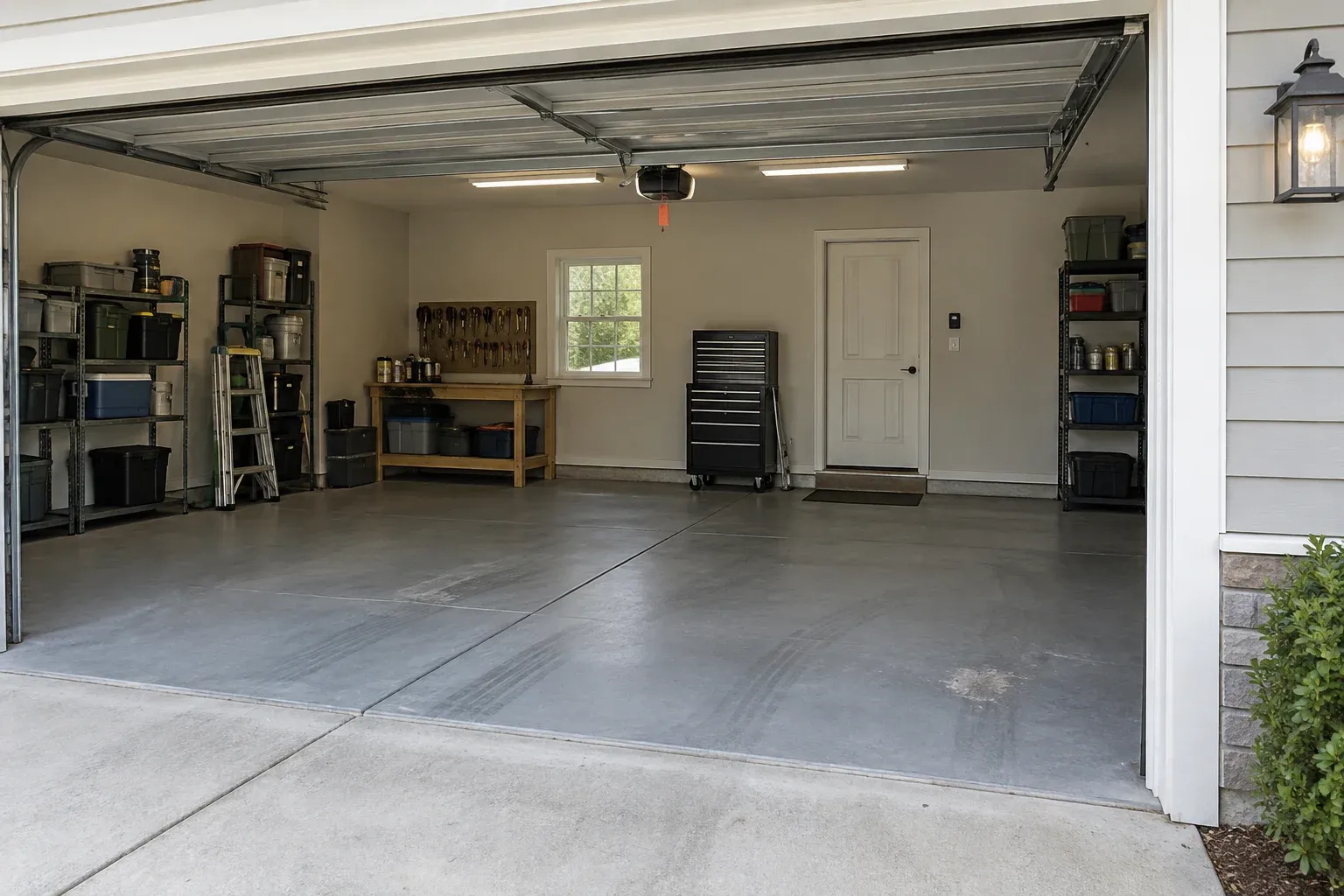
Garage pressure washing in Vinings can sound like the obvious answer to a dark, patchy garage floor. For long-term homeowners, however, the important question is whether those marks sit on top of a sound finish or reveal a finish that is wearing out. Dust, oily residue, discoloration and missing coating can look surprisingly similar from the garage doorway. Treating them all as dirt risks sacrificing coating that could otherwise be preserved.
From a painter’s perspective, the goal is not simply a brighter floor. It is to remove contamination without damaging a serviceable coating, then recognize anything cleaning cannot correct. Before choosing garage pressure washing, identify the existing surface and separate maintenance from repair. The same distinction matters in commercial workshops and service bays, where vehicle traffic and spills can obscure the condition of a coated concrete floor.
Identify what is already protecting the concrete
An established garage may have bare concrete, a penetrating treatment, floor paint or a multi-layer resin coating. A decorative flake surface may also have a separate clear topcoat. These surfaces do not all tolerate the same chemicals, abrasion or water exposure. Gloss and color offer clues, but they do not reliably identify the product. Look for leftover containers, old invoices or installation records before relying on appearance alone.
Sherwin-Williams’ concrete floor cleaning guidance starts with understanding the surface finish and recommends gentle routine cleaning. It also warns that excessive wetting can affect painted-floor adhesion. That is a reason to be cautious, not proof that every coated garage needs the same treatment. A water-beading observation may suggest a protective treatment, but it cannot establish the coating chemistry or authorize pressure washing. Product-specific maintenance instructions remain the better guide.
Read the marks: dirt, staining or missing coating?
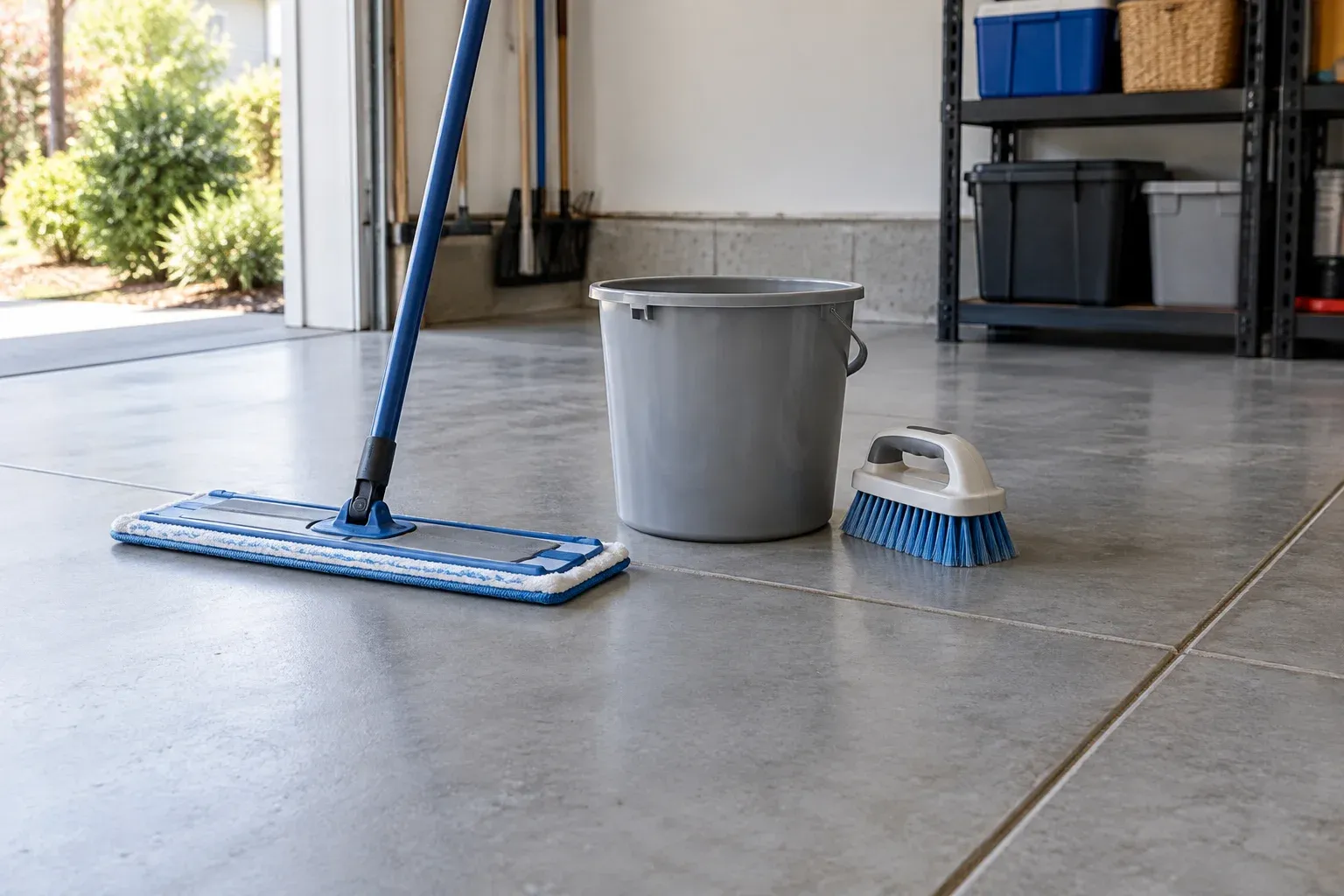
Surface dirt usually follows use: dusty wheel paths, tracked-in soil near the door or residue beneath stored items. The coating underneath may still look continuous, with no lifted edges or exposed concrete. A small cleaning test using a method permitted by the coating manufacturer can help clarify the problem. Evaluate the area after it dries; a wet surface can temporarily hide dullness, scratches and differences in color.
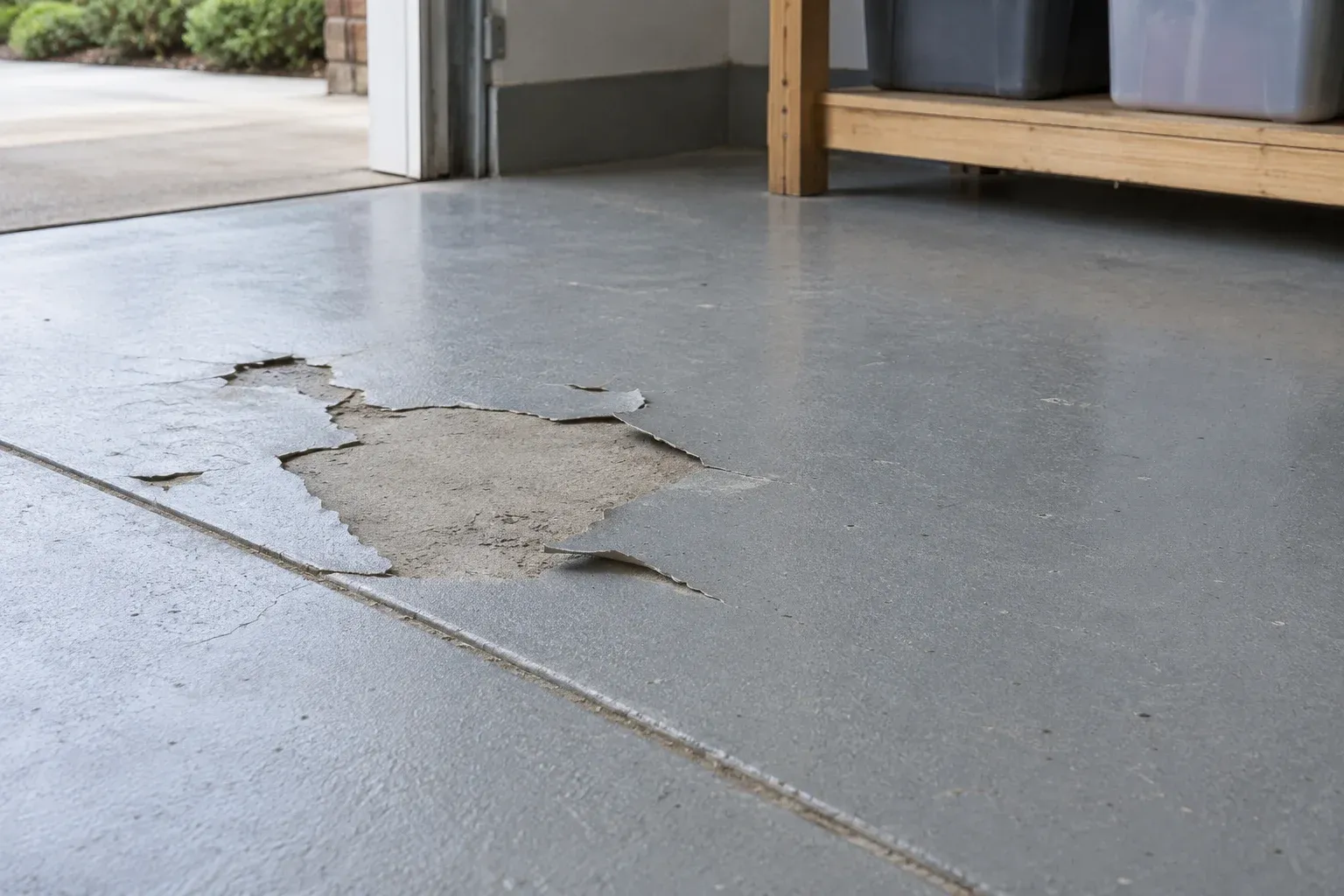
Coating failure changes the surface itself. Look for flakes, curled edges, blisters, bare patches or places where the film has worn noticeably thinner. Smooth but faded areas can also be finish changes rather than removable grime. A dark spot that remains after appropriate cleaning may be a persistent stain, not failed adhesion. Color alone is inconclusive; the useful clues are continuity, texture and whether the coating is still attached.
- Dust or residue over a continuous finish: investigate compatible cleaning.
- Lifted edges, blisters or missing film: investigate coating damage.
- Persistent discoloration without peeling: assess staining and finish wear separately.
Set realistic expectations for cleaning
Compatible cleaning may remove loose soil, surface grease and cleaner residue that makes a floor look cloudy. It can also reveal the floor’s actual condition more clearly. That improvement has limits: cleaning cannot replace missing coating, fill scratches, restore an abraded topcoat or rebond a peeling film. Older oil stains in porous concrete may remain partly visible even after treatment. A realistic scope should distinguish improved cleanliness from restored uniform appearance.
More force is not a reliable solution to a mark that resists cleaning. Increasing pressure or using a harsher chemical can turn a cosmetic issue into finish damage. Where the coating is intact, preservation should guide the method. Where it is already loose, removing material becomes a preparation question rather than ordinary maintenance. Those are different tasks, with different expectations for the resulting surface and any follow-up coating work.
Recognize when peeling needs a separate assessment
Peeling deserves attention because its cause may lie below the visible dirt. Sherwin-Williams’ guidance on peeling concrete floors lists possible contributors including contamination, moisture, unsuitable coatings and deteriorating concrete. None can be diagnosed from a photograph alone. Repeated peeling in the same place, recurring dampness or powdery deposits should prompt assessment before another coating is applied. Washing the surface does not resolve an underlying moisture source or restore weak concrete.
Avoid pulling flakes away or directing water beneath lifting edges just to see what happens. Document the location and extent of damage while the floor is dry. Note whether it appears beneath parked tires, near the doorway or around a crack, without assuming that pattern proves a cause. For a homeowner planning to keep the property, understanding why adhesion was lost is more useful than temporarily making the exposed area look cleaner.
Keep maintenance and repainting preparation separate
Manufacturer preparation instructions are not interchangeable with maintenance instructions. Benjamin Moore’s garage floor painting guide describes sweeping, mopping, grease removal, thorough rinsing and complete drying as part of preparation. It recommends professional involvement for conditions including peeling, existing high-gloss coatings and moisture problems. This supports a careful assessment before refinishing; it does not establish that pressure washing is suitable for every existing garage coating.
If refinishing is needed, cleaning is only one part of preparation. The proposed coating’s technical instructions determine requirements for adhesion, surface profile, dryness and compatibility with retained material. Loose coating may need removal, while sound coating may require a different treatment. Sherwin-Williams specifically cautions against etching painted surfaces. Do not turn a general concrete-preparation recipe into a do-it-yourself treatment for an unknown finish.
Book an assessment with clear expectations
Before requesting an estimate, gather the coating information you have and describe the result you want. Is the aim to remove tracked-in dirt, address oily residue or prepare a failing floor for future coating work? Ask whether the proposed cleaning is compatible with the existing finish, what a test area would establish and which marks may remain. Also discuss protecting stored belongings, adjacent finishes and electrical equipment, along with water containment and drying.
For garage pressure washing in Vinings, a useful starting conversation with Alpharetta Painters and Stainers (Paint and Stain) distinguishes cleaning from coating repair rather than assuming they are one service. Use the contact page to explain the floor’s condition and ask about an appropriate scope. The lasting objective is straightforward: preserve sound material, identify damage honestly and choose a method suited to your garage floor in Vinings.
Frequently asked questions
Can garage pressure washing remove peeling floor paint?
It may dislodge loose paint, but that is not a repair and can enlarge damaged areas. Peeling needs an assessment of adhesion, moisture and the existing coating before a preparation or refinishing method is selected.
How can I tell whether a dark garage floor mark is dirt or coating wear?
Look for changes in texture and coating thickness, not just color. Dirt may improve with a small, manufacturer-compatible cleaning test. Exposed concrete, lifting edges or a worn-through film indicate damage. A stain that remains after cleaning does not automatically mean the coating has failed.
What if I do not know which coating is on my Vinings garage floor?
Look for leftover containers, installation paperwork or product information from the previous owner. Avoid assuming a glossy or flake-covered floor is a particular coating. Before booking garage pressure washing in Vinings, explain that the finish is unidentified and ask how compatibility will be established.