
Painting a Fence with New and Old Boards in Tucker: Planning a Consistent Finish
New fence boards and older painted wood rarely start alike. Learn how preparation, primer choices and a test section help Tucker homeowners plan a consistent finish.
Start with a realistic finish goal
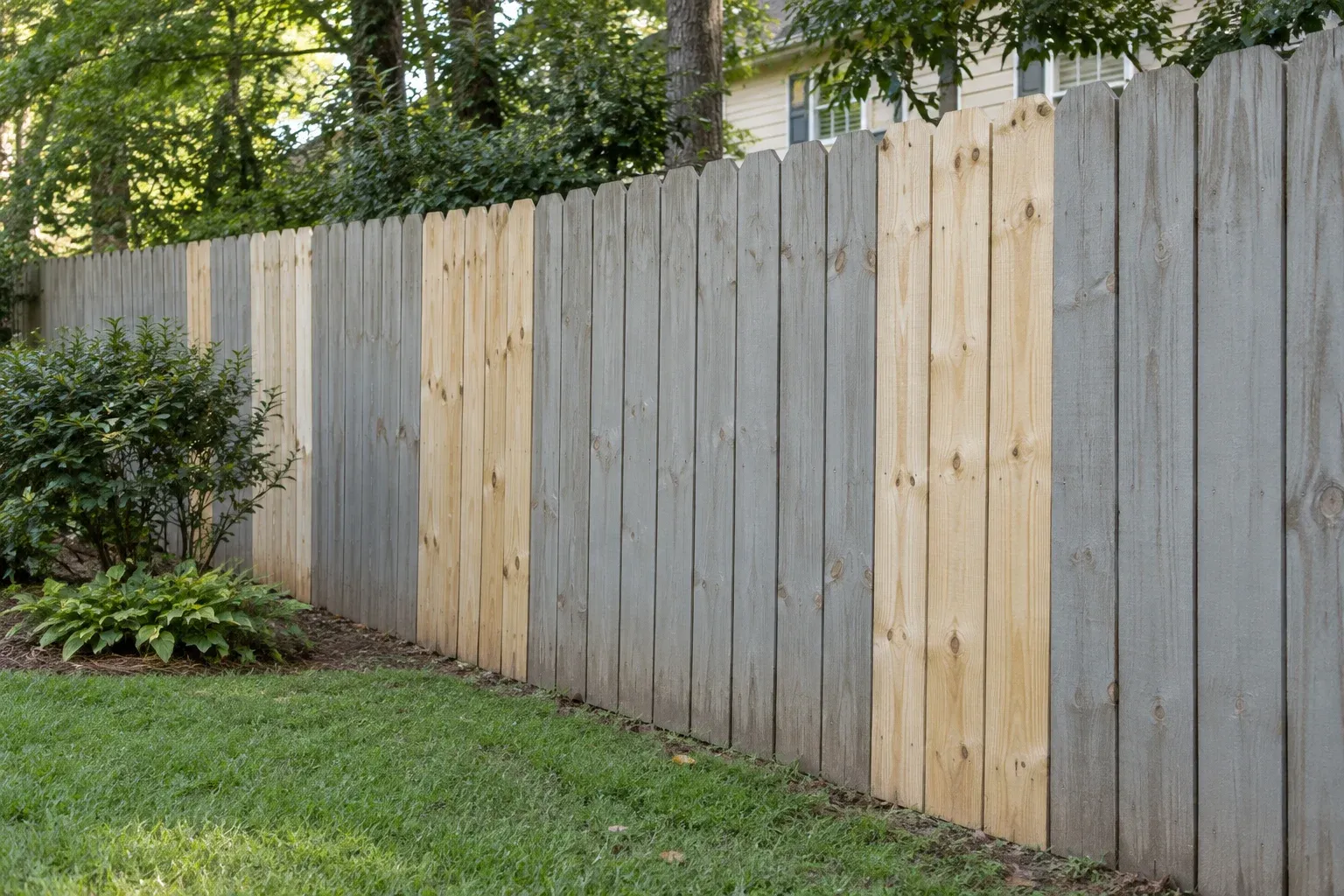
Fence painting in Tucker becomes more involved when pale replacement boards sit beside older, previously painted wood. The same finish color may cover both, yet the completed fence can still reveal differences in grain, roughness and earlier coating layers. For homeowners planning to keep their fence, the useful question is not simply whether everything can be painted. It is what preparation and coating plan will produce an appearance they can comfortably live with.
A thoughtful fence painting scope starts by separating color consistency from texture consistency. Paint can unify the fence visually without making every board look newly milled. Before choosing a color, establish which surfaces are sound, which boards are ready for coating and how the proposed finish will behave across both old and new wood. That groundwork makes the estimate more meaningful and reduces surprises when the full fence is finished.
Understand what a new coat can and cannot hide
Replacement lumber often has a different surface from the boards around it. It may be smoother, more sharply edged or simply a different wood species. Older boards may have raised grain, shallow checks and softened edges from years outdoors. Even when the replacement matches the original dimensions, those surface differences can catch light differently. Strong side lighting along a fence can make variations noticeable that are much less apparent from a patio or kitchen window.
Existing paint adds another variable. Older boards may carry several layers, while replacement boards begin as bare wood. A sound coating can still leave visible ridges or a heavier texture. An opaque finish helps conceal differences in underlying color, but it is not a leveling material for deep grain or uneven coating buildup. Decide whether your goal is a cohesive fence at normal viewing distance or a more closely matched surface that requires additional preparation.
Define preparation before choosing the finish
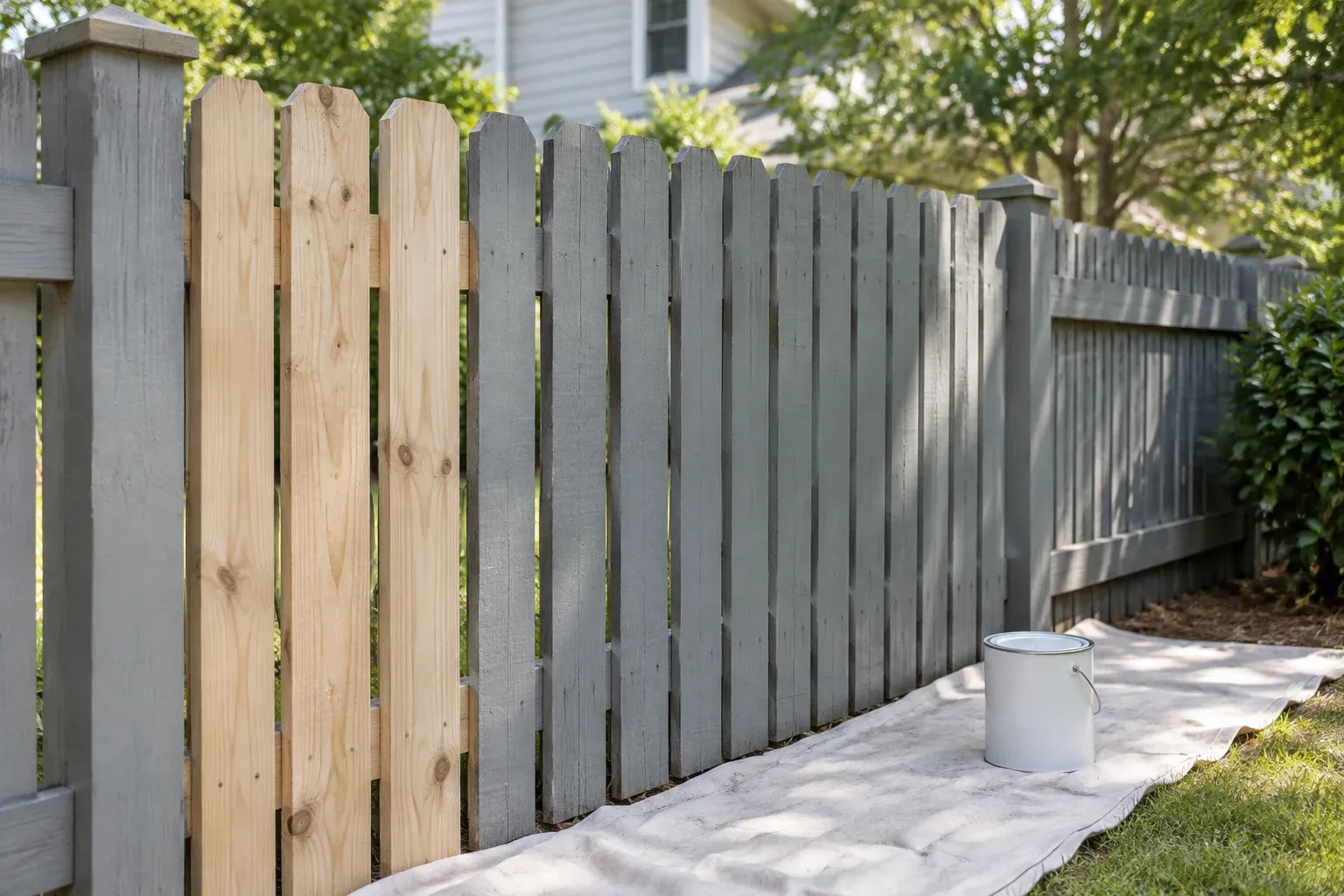
Before painting, have the fence assessed as a collection of different surfaces rather than one continuous wall. The assessment should distinguish bare replacement wood, firmly bonded existing paint, areas where the coating is failing and wood that cannot reliably support a finish. The preparation method should be selected after the existing coating and substrate have been evaluated, not assumed from appearance alone. This is a scope decision to resolve with the painting contractor rather than a reason to begin removing an unidentified coating yourself.
Cleaning and drying also belong in that plan. Dirt and surface growth can interfere with coating performance, while recently installed lumber may not yet meet the paint manufacturer’s moisture requirements. Avoid treating a fixed number of days after installation as proof that a board is ready. Ask how readiness will be checked and how shaded or damp sections will affect scheduling. Cleaning should leave a suitable painting surface, not a rougher fence that creates another appearance problem.
Match the primer plan to the mixed surfaces
Primer selection should reflect the actual surfaces and the chosen finish system. Bare wood may need a wood primer, while sound existing paint may require a different approach under the product instructions. Some wood species can contribute staining that calls for an appropriate stain-blocking primer. Those are reasons to identify the lumber and coating conditions rather than request one universal primer for every board. The estimate should explain where primer is included and what purpose it serves.
Spot priming and full priming are not interchangeable promises of a better appearance. Spot priming may address exposed wood within an otherwise suitable painted surface; broader priming may be appropriate where the selected system or mixed conditions warrant it. Neither approach erases deep texture. Ask whether the proposed finish is intended for exterior wood fences, how it will work over the existing coating and what coat sequence is specified. Product compatibility matters more than simply adding another layer.
Use a representative test section to settle expectations
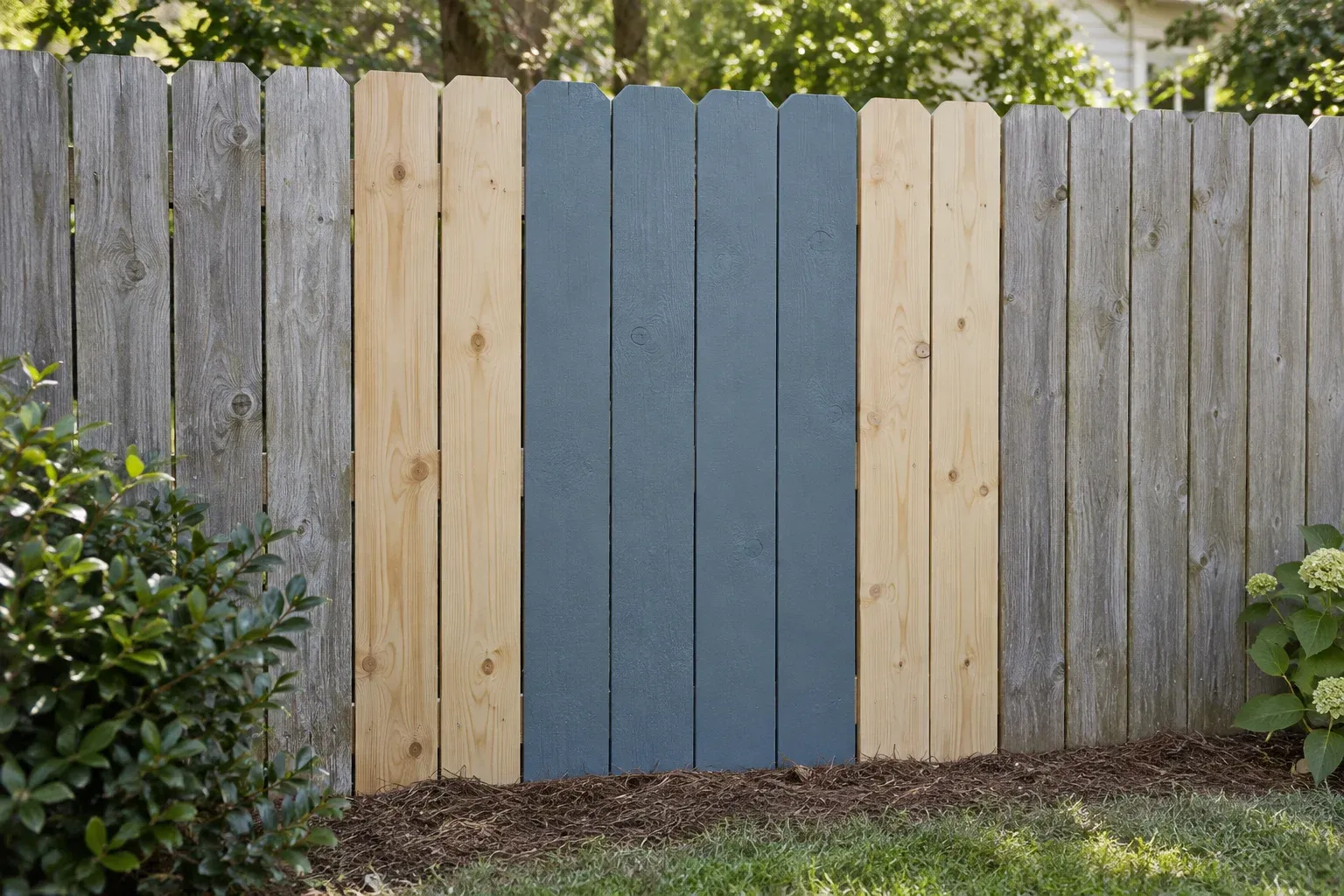
A useful test section crosses the boundary between old and new boards. Painting only one replacement picket tells you little about how the entire fence will read. Include several adjacent boards with representative grain, existing coating texture and exposure. Use the proposed preparation, primer and finish sequence so the sample answers the real question. A color swatch on an unrelated piece of wood cannot demonstrate how these particular surfaces will look together.
Review the section after the specified drying interval, from both close range and the places where you usually see the fence. Look for color coverage, sheen differences, visible coating transitions and the amount of grain showing through. Check it under more than one lighting condition if practical. If the result is too uneven, discuss whether additional preparation, a different sheen or revised expectations would help before authorizing the remaining work. Agree in advance whether the test section is included in the estimate.
Ask for an estimate that explains the finish
An estimate should describe the fence components being painted, not just its approximate length. One face versus both faces, exposed rails, posts, caps and gates can change the amount of work substantially. Access behind shrubs or along a neighboring property also affects what can reasonably be included. Ask how coverage in narrow gaps and around hardware will be handled. These details matter for homeowners and for owner-operated offices or workshops with painted wood boundary fences.
Keep repairs subordinate to the painting scope. A loose or deteriorated board may need attention before coating, but that does not turn every appearance difference into a replacement recommendation. Ask for necessary repairs to be identified separately, with the painting preparation and finish work clearly described. The written scope should also state what happens if closer inspection reveals additional unsuitable surfaces. This makes it easier to compare proposals based on the work included rather than the final number alone.
- Identify the included fence faces, rails, posts and gates.
- Describe preparation and primer locations for new and old boards.
- Name the finish product, color, sheen and planned coat sequence.
- Clarify the test section, access limitations and separately scoped repairs.
Plan for a cohesive fence, not identical boards
When discussing your project with Alpharetta Painters and Stainers (Paint and Stain), explain where boards were replaced and which views matter most to you. Point out any areas that stay damp or have repeatedly lost paint. Bring the conversation back to the proposed preparation, coating system and sample result. You can use the contact page to request an estimate discussion without assuming that every fence needs the same treatment.
Well-planned fence painting in Tucker begins with an honest picture of the wood you already have. New and old boards can share a consistent finish color while retaining different textures. A clearly defined preparation plan, suitable primer choices and a representative test section give you a firmer basis for approving the work. For a long-term homeowner, that is more useful than expecting paint alone to make unlike boards identical.
Frequently asked questions
Will painting make replacement fence boards look exactly like the old ones?
An opaque finish can bring the boards into a consistent color range, but grain, weathering, coating edges and board profiles may remain visible. A representative test section helps establish whether the finished appearance meets your expectations.
Do new and previously painted fence boards need the same primer?
Not necessarily. Bare wood and an existing painted surface can have different requirements. The primer plan should follow the chosen coating system’s instructions and account for wood species, surface condition, adhesion and any staining concerns.
What should a mixed-board fence painting estimate include?
Ask for the included fence faces and components, preparation scope, primer locations, finish product and sheen, coat plan, test-section allowance and treatment of inaccessible areas. Any limited board repairs should be identified separately from painting.