
Repair or Replace Interior Trim? Planning Carpentry Before Repainting in Dunwoody
Decide when damaged interior wood trim needs a localized repair or full-run replacement, and define the carpentry and repainting scope before work begins.
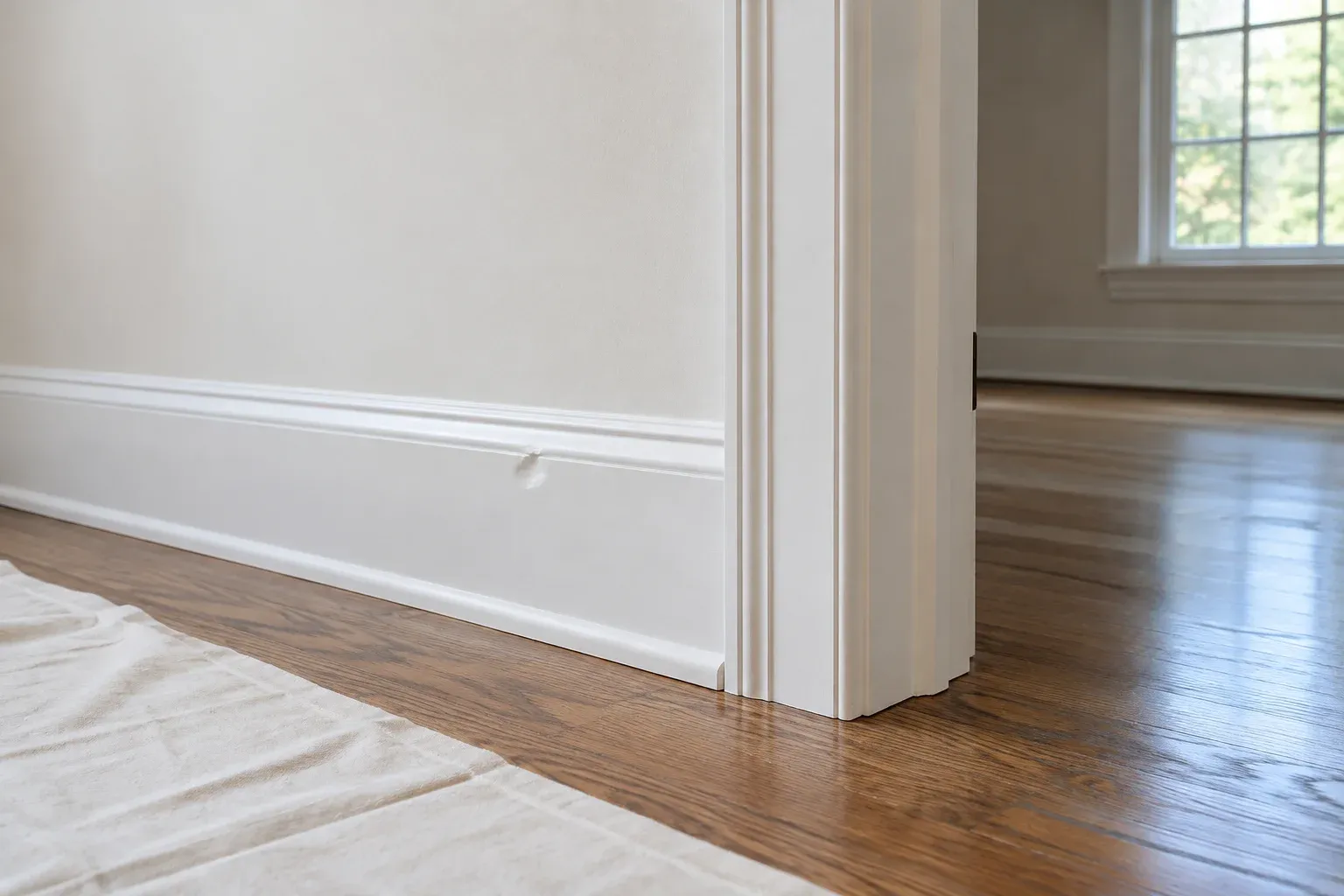
Start with the defect, not the paint color
Planning Carpentry in Dunwoody before repainting starts with a simple distinction: is the problem on the surface, or is the trim itself wrong? Scuffs, shallow dents and small nail holes often need preparation rather than replacement. Missing pieces, mismatched molding and joints that sit out of alignment require a different conversation. For homeowners staying in their homes long term, the goal is a consistent finished detail—not merely fresh color over an unresolved defect.
Baseboards, door casings and crown molding do not all need the same treatment. One damaged section may justify a localized repair, while a patchwork wall run may be better replaced between natural stopping points. When discussing carpentry in Dunwoody, compare both the woodwork and the repainting each option requires. The smallest replacement is not always the least involved route once matching, fitting and finishing are considered.
What paint preparation can—and cannot—fix
Paint preparation can address minor surface defects in otherwise sound wood. Cleaning removes residue; suitable filler can level small holes and shallow dents; controlled sanding can smooth repairs without erasing the molding's shape. Small gaps at the wall-to-trim junction may be suitable for paintable caulk. Benjamin Moore's trim-painting guidance places inspection and repair before painting and recommends priming repairs. These steps improve the surface, but they do not rebuild missing wood or straighten a loose board.
Preparation also needs to account for the existing coating. In homes built before 1978, paint may contain lead, and disturbing it can create hazardous dust. EPA's lead-safe renovation guidance recommends hiring a lead-safe certified contractor for renovation work in these homes. Discuss that issue before sanding or removing trim, rather than treating old coatings as an ordinary preparation detail. This guidance does not establish any particular contractor's certification.
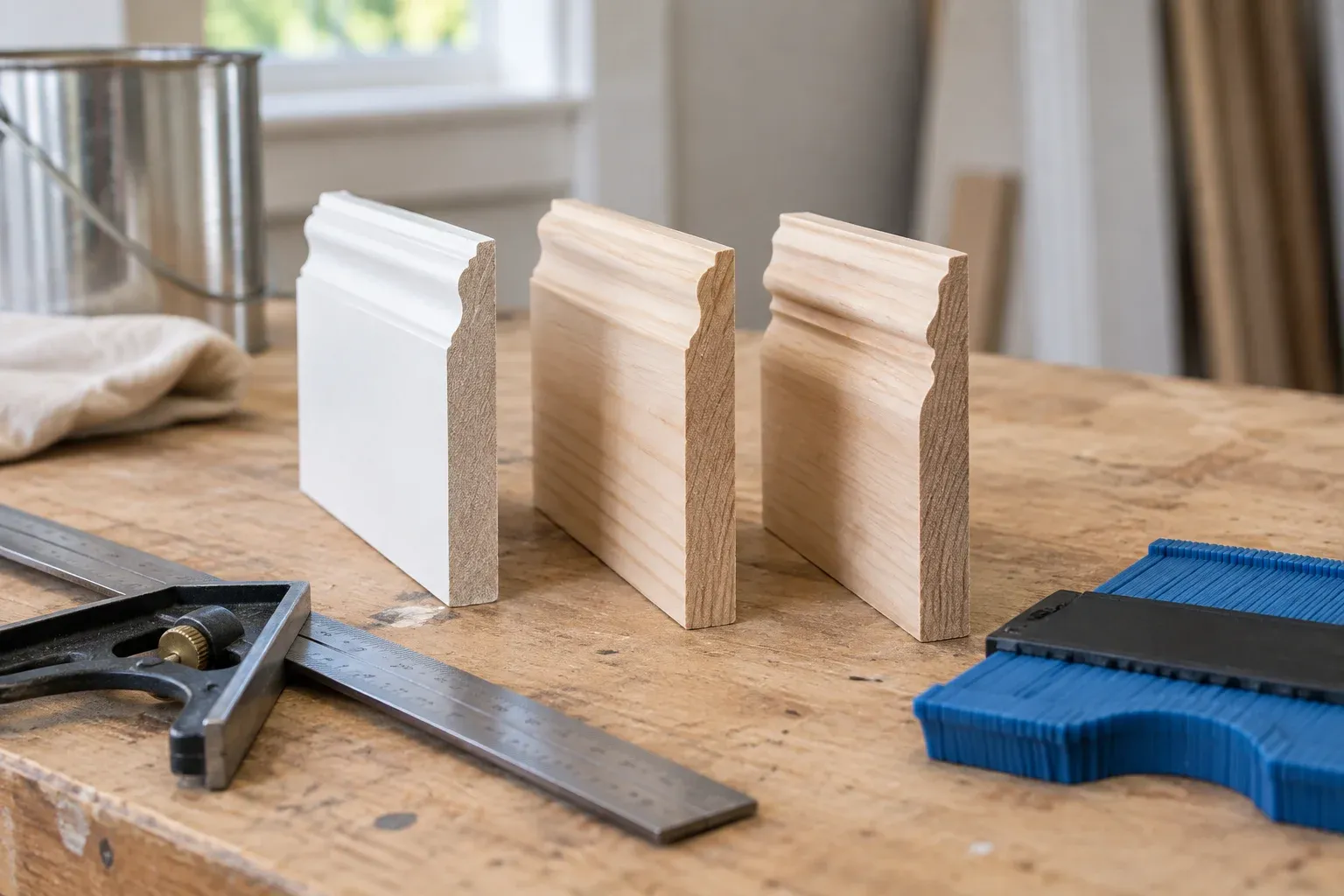
When a localized repair is worth keeping
A localized repair makes sense when damage is limited and the surrounding trim remains sound and securely attached. A shallow furniture dent on a flat baseboard face is different from a broken decorative edge. The first may be filled and shaped; the second may require a wood repair or replacement section. Look at how much original material remains and whether the contour can be restored without leaving an obvious flattened patch.
Repair boundaries matter as much as repair size. A short inserted piece creates additional joints, which must fit accurately and have adequate support. If several repairs would be clustered along one wall, replacing that wall's run may produce a more coherent result. Conversely, preserving sound original trim can avoid disturbing adjacent finishes. Ask for the reasoning behind each proposed boundary rather than assuming that either repair or replacement is always preferable.
Missing sections and mismatched profiles need a matching plan
Missing trim requires matching more than its nominal height. Thickness, bevels, curves and the position of decorative features all affect how a new piece meets the existing molding. Two baseboards can have the same overall height yet cast noticeably different shadows. Compare a physical sample or clearly visible end profile when possible, and discuss how the replacement will meet door casing, corners and any separate shoe molding.
When a close match is unavailable, consider replacement to a natural break: a corner-to-corner baseboard run or a complete casing assembly around one doorway. Custom matching may also be an option, but availability and fabrication need confirmation. A full run does not automatically mean the entire room. The important question is where a profile change can stop without looking accidental, particularly when adjacent rooms remain unchanged.
Poorly aligned joints usually need fitting before filling
A visible seam is not necessarily a filler problem. If one side of a joint projects beyond the other, the pieces may need refitting, repositioning or replacement. An open corner can reflect an inaccurate cut, loose attachment or movement. Filling the gap without understanding the cause leaves the alignment issue in place. Paint may actually make the raised edge easier to notice under light from a nearby window.
Ask whether the existing pieces can be reset while preserving their profile. Sound trim with a poor fit may not need wholesale replacement, but a board cut too short cannot be lengthened with paint preparation. Walls and floors may also be uneven, so a reasonable fitting plan should account for those conditions. The objective is a stable, visually consistent joint—not forcing every piece into an assumed perfectly square room.
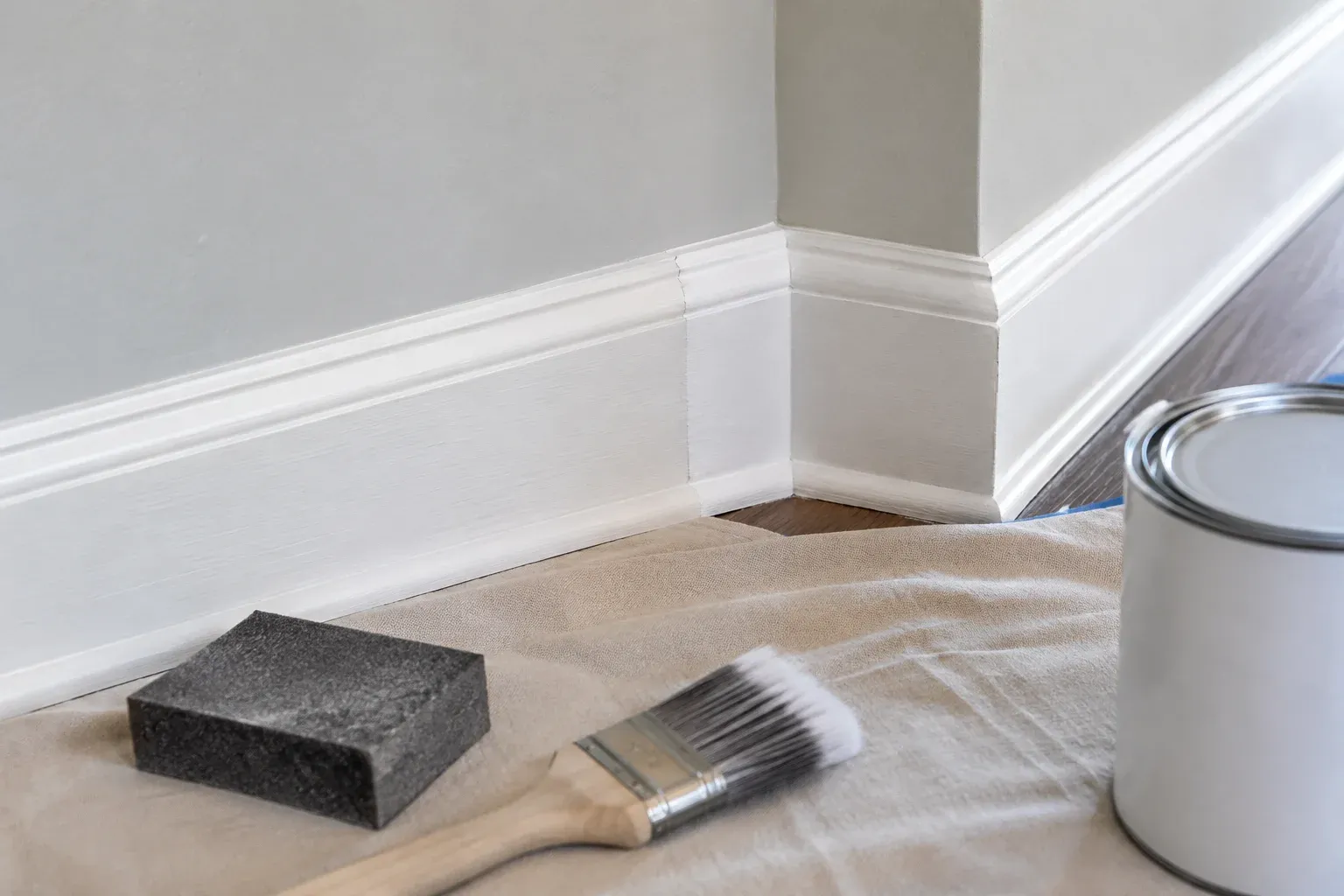
Decide how far repainting should extend
The carpentry boundary and the painting boundary are often different. Replacing a short section might still call for repainting the complete wall-length baseboard to keep sheen and brush texture consistent. New wood and repaired areas also need appropriate preparation and primer. If removal damages nearby wall paint, that surface becomes part of the discussion too. Specify what will be finished, not simply what will be removed and installed.
Touch-up results depend on color, sheen and surface texture, as Benjamin Moore's touch-up guidance explains. Glossier finishes are more challenging to blend. For trim, discuss stopping at a corner or another clear boundary rather than ending paint in the middle of a visible face. Repainting every room is not automatically necessary, but a small repair should not come with an unexamined promise of an invisible paint match.
Use this checklist when discussing an estimate
An estimate is easier to evaluate when it identifies specific pieces rather than saying only 'repair trim.' The FTC recommends written estimates describing the work, materials, completion date and price. For this project, ask for enough detail to compare a localized repair with full-run replacement on equivalent terms. Neither option is fully defined until profile matching, adjacent-surface work and the extent of repainting are included.
- Identify the room, trim type and exact pieces to repair, reset or replace.
- Confirm profile height, thickness, contours and material; ask how a match will be checked.
- Define repair boundaries and where replacement runs will begin and end.
- Clarify treatment of loose trim, uneven joints and any underlying moisture concern.
- Separate carpentry, surface preparation, priming and finish painting in the scope.
- State whether painting covers the repair, the full run, a doorway assembly or the room's trim.
- Include adjacent wall repairs, floor protection, cleanup and how unexpected conditions will be discussed.
Choose the scope that supports a consistent finish
For Carpentry in Dunwoody, keep sound trim when a defined repair can restore its shape and fit; consider full-run replacement when missing material, repeated damage or mismatched profiles make isolated patches impractical. Set the repainting boundary separately so the finished result receives the same attention as the woodwork. When discussing your project with Alpharetta Painters and Stainers (Paint and Stain), use those distinctions to describe the result you want and request a clearly defined scope.
Frequently asked questions
Can paint hide a mismatched trim profile?
Paint can make the color consistent, but it cannot change molding height, thickness or contours. If a replacement profile differs noticeably, consider finding a closer match or replacing a complete run between natural stopping points.
Does one damaged baseboard section mean the whole room needs replacement?
Not necessarily. A localized repair or short replacement may work when the surrounding wood is sound, the profile can be matched and the new section can be fitted securely. Widespread damage or repeated mismatches may make a larger replacement more practical.
Should an estimate separate carpentry from repainting?
Yes. Ask for the repair or replacement boundaries, materials, preparation and repainting extent to be described separately. That makes it easier to compare a localized repair with full-run replacement without overlooking the finish work either option needs.