
Touch Up, Repaint One Wall, or the Whole Room? Interior House Painting in North Druid Hills
Decide how much of a room to repaint by checking the existing finish, testing a touch-up, and using natural wall boundaries to set the scope.
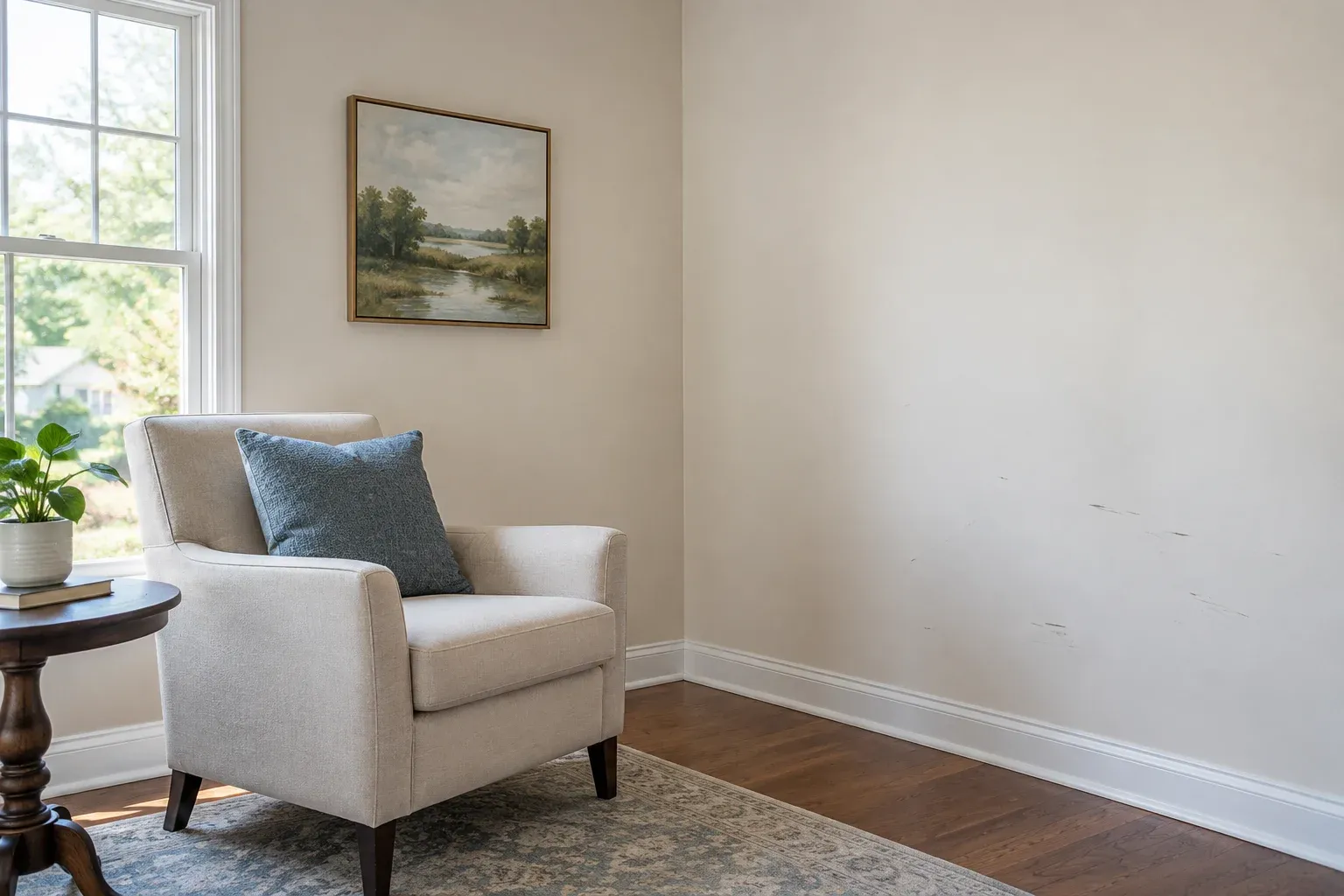
Start With the Finish You Want to Keep
Interior house painting in North Druid Hills does not have to mean repainting every wall because of a few marks. A scuffed corner, a furniture rub, or a small repaired spot may call for a touch-up, one complete wall, or the whole room. The right choice depends less on the size of the blemish alone than on whether new paint can blend with the existing finish.
For homeowners planning to stay, the useful goal is a finish that looks consistent during everyday use—not just immediately after painting. Start with the smallest reasonable scope, then test it. If a limited repair remains noticeable, expand to a natural boundary rather than repeatedly enlarging the patch. That approach helps separate necessary work from optional room-wide changes.
Check the Existing Paint Before Choosing a Scope
First, decide whether the existing paint is worth preserving. Look beyond the obvious mark: are the surrounding walls evenly colored, firmly attached, and reasonably clean? Is wear concentrated behind a chair, or spread across the room? Try gentle cleaning on a small inconspicuous area using guidance appropriate to the paint. Some apparent damage is removable dirt, while aggressive rubbing can leave a dull or polished spot.
Color, sheen, and texture each affect the result. The same color name does not ensure a match across different products or bases. Sheen labels are not necessarily equivalent between paint lines. A brush can leave a different pattern from the original roller, and a smoother repaired area can stand out beneath matching paint. Peeling, persistent dampness, or recurring stains need their cause assessed before choosing a cosmetic painting scope.
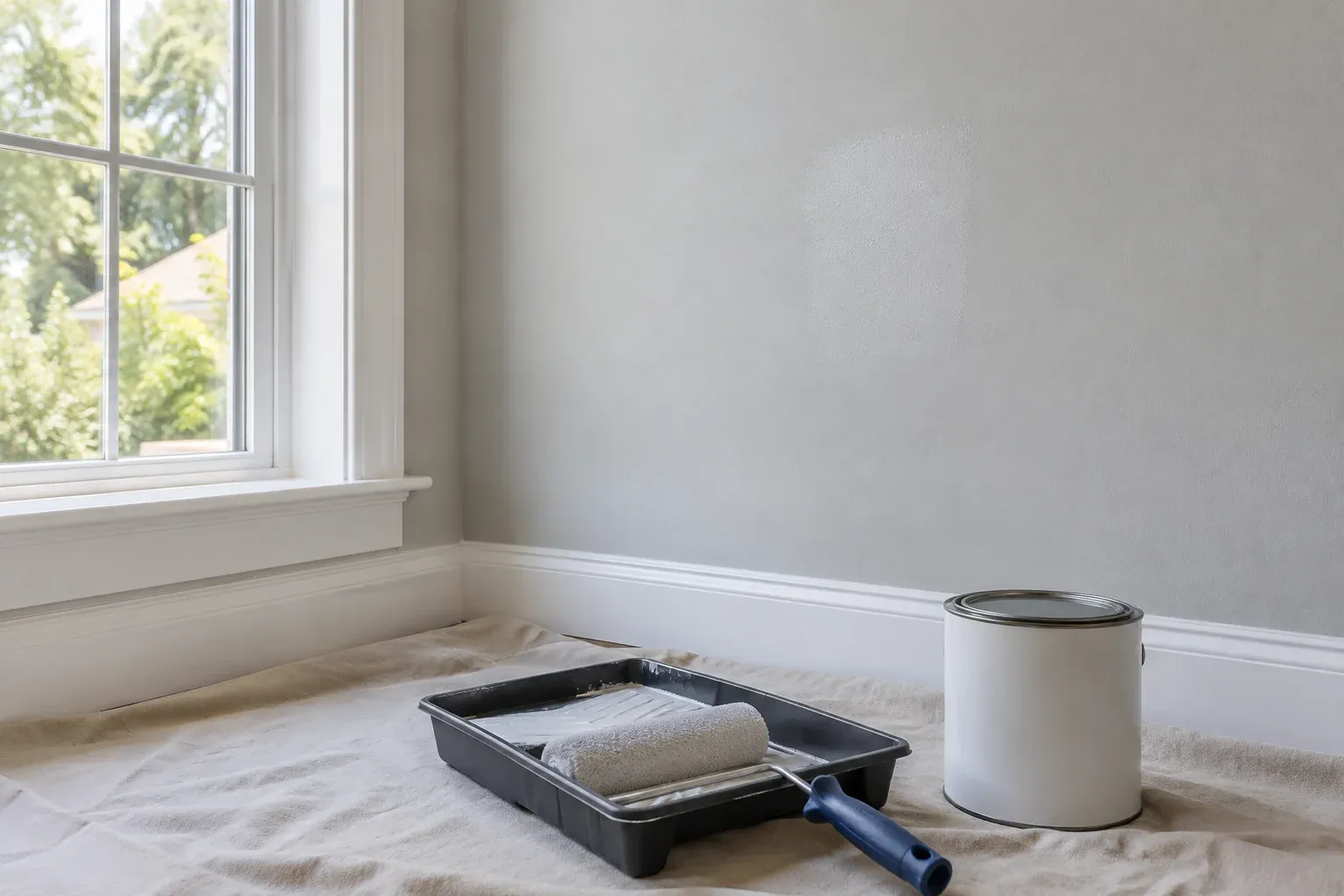
When a Small Touch-Up Is Worth Testing
A touch-up is most promising when the mark is isolated, the surrounding finish is sound, and the original paint product and application method are known. Lower-sheen surfaces often make small differences less conspicuous than more reflective finishes, but there is no automatic pass. A tiny repair in strong side light can be more noticeable than a larger repair on a sheltered wall.
Leftover paint is useful evidence, not a promise of a match. Confirm its product, color, and sheen, and assess whether it remains usable. Storage conditions and age can affect the material, while the wall itself may have changed through cleaning, wear, and light exposure. Stir usable paint thoroughly as directed. If the finish information is missing, treat a proposed color match as something to test rather than a reason to approve touch-ups throughout the room.
Use a Test Patch as the Decision Point
Choose one representative mark instead of testing every blemish. The spot should experience the lighting that makes you concerned about the wall. Clean it gently and let it dry. Where a minor repair is needed, make that repair first and prime if required by the surface and paint instructions. Keep preparation proportional; broad sanding or unnecessary patching can create a larger texture difference than the original mark.
Apply the candidate paint sparingly with a tool that reproduces the surrounding finish as closely as practical. Allow it to dry for the period specified by the product before judging it; wet paint is not a reliable comparison. Inspect from normal seating and standing positions in daylight and under evening lighting. Look straight on and along the wall for differences in color, reflectivity, and texture. If the patch remains distracting, stop adding scattered touch-ups and consider the whole wall.
- If the dry patch blends in ordinary viewing conditions, proceed with similarly limited marks.
- If the patch shows but the rest of the room is sound, evaluate a full-wall repaint.
- If several walls already look uneven or worn, compare a room-wide scope.
When Repainting One Wall Makes Sense
Repainting one wall removes the patch boundary from the middle of that surface. Inside corners, outside corners, and trim-framed wall panels can provide logical stopping points. These changes in plane or material help the eye accept small differences between surfaces. A doorway does not always divide a wall: if painted drywall continues above it, stopping beside the opening can leave an obvious break.
Judge the proposed wall against its neighbors before committing. Strong daylight across adjoining surfaces can reveal a color or sheen difference, particularly in open living areas with long sightlines. Repainting one wall also does not automatically make it an accent wall; a near-match may simply look unintended. For a home office or dining room where the existing color still works, one wall can be a sensible scope if the dry sample and boundaries support it.
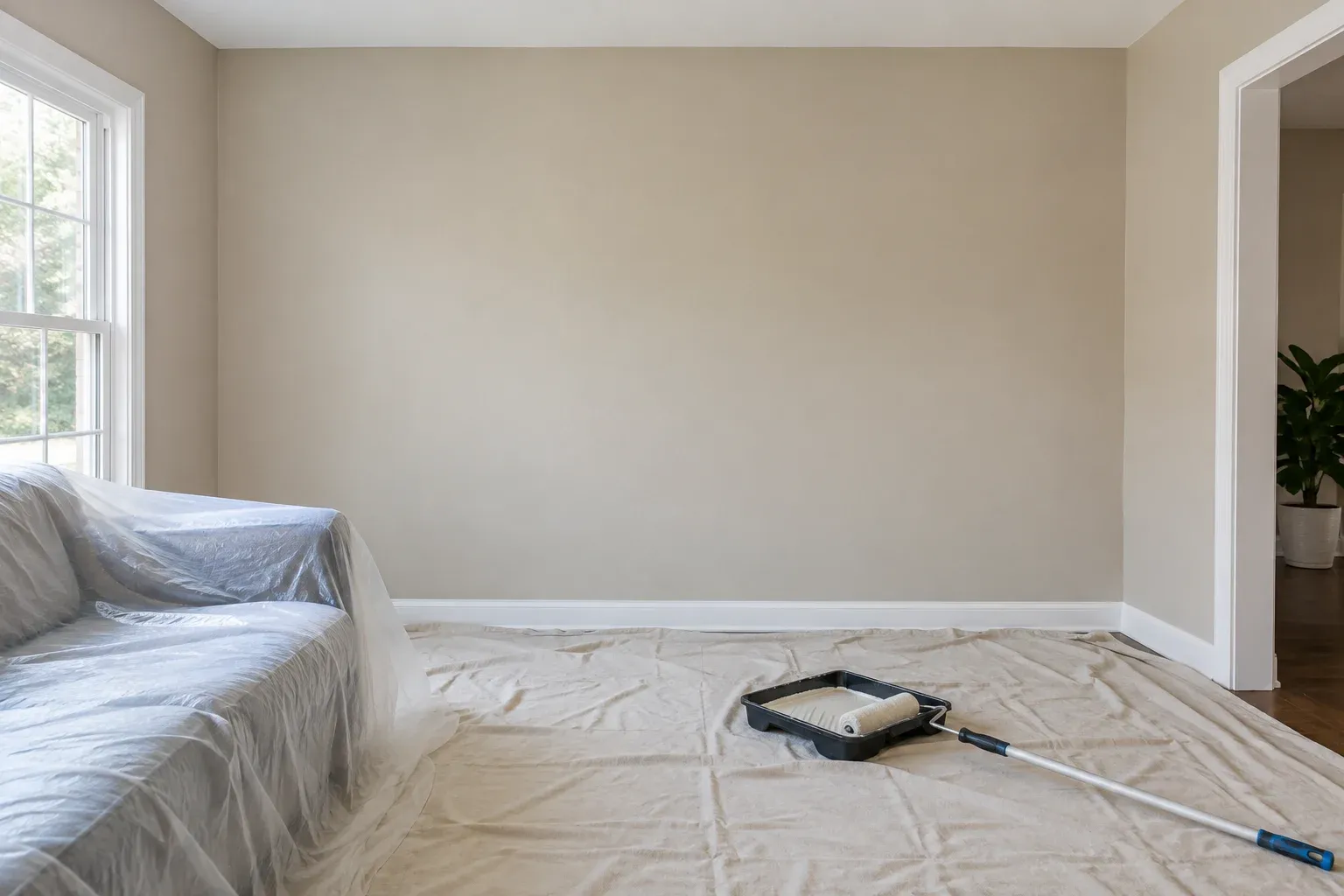
When the Whole Room Is the Better Scope
A whole-room repaint becomes more useful when wear appears on several walls, previous touch-ups are already visible, or the existing finish varies from surface to surface. It also makes sense when you want a different overall color or sheen. Trying to preserve scattered sections of an unwanted finish can complicate the work without delivering the room you actually want.
Define what “whole room” includes. Repainting all walls does not necessarily require painting the ceiling, doors, or trim. Those surfaces should be assessed separately for condition and compatibility with the new wall finish. In connected spaces, identify where the room truly ends; an uninterrupted wall may extend beyond the furniture arrangement. Agreeing on those limits matters more than labeling the project a single room.
Build a Clear Scope Before Requesting an Estimate
Before requesting an interior house painting estimate, record which surfaces need attention and what the test revealed. Describe the desired outcome as well as the marks: keeping the current color, improving consistency, or changing the room's appearance. This gives Alpharetta Painters and Stainers (Paint and Stain) a clear starting point for a scope discussion without assuming every surface needs the same treatment.
- Identify each affected wall and its natural stopping points.
- Record the existing paint product, color, and sheen when known.
- Note test-patch results in daylight and evening light.
- Separate minor surface repairs from unresolved moisture or adhesion problems.
- Specify whether ceilings, trim, doors, and adjoining wall runs are included.
- Discuss furniture access, room use, and the finish consistency you expect.
Let the Wall, Not the Blemish Alone, Set the Scope
Choose the smallest scope that produces a coherent result, not simply the smallest painted area. A successful touch-up preserves a sound finish; a complete wall avoids a distracting patch; a room-wide repaint addresses broader wear or a planned change. For interior house painting in North Druid Hills, testing the actual wall and agreeing on boundaries provides a practical basis for deciding which option deserves the work.
Frequently asked questions
Will leftover paint match the wall if it came from the original can?
Not necessarily. The wall may have changed through light exposure, cleaning, or wear, and stored paint may no longer be usable. Even sound original paint can produce a different sheen or texture when applied differently. Stir usable paint thoroughly and evaluate a small test after it dries according to the product instructions.
Can I repaint one wall without repainting the whole room?
Yes, when that wall has clear boundaries and its finished color and sheen look compatible with the adjoining walls. Inside corners often make a difference less noticeable than a patch in the middle of a wall. Test first, especially when the walls share strong daylight or the room has uninterrupted wall runs.
Does a visible touch-up mean the whole room needs painting?
No. A visible test patch usually means the repair needs a larger boundary, not automatically a whole-room repaint. Painting the affected wall may be enough. Consider the entire room when several walls are worn, the existing finish is inconsistent, or you want to change the overall color or sheen.