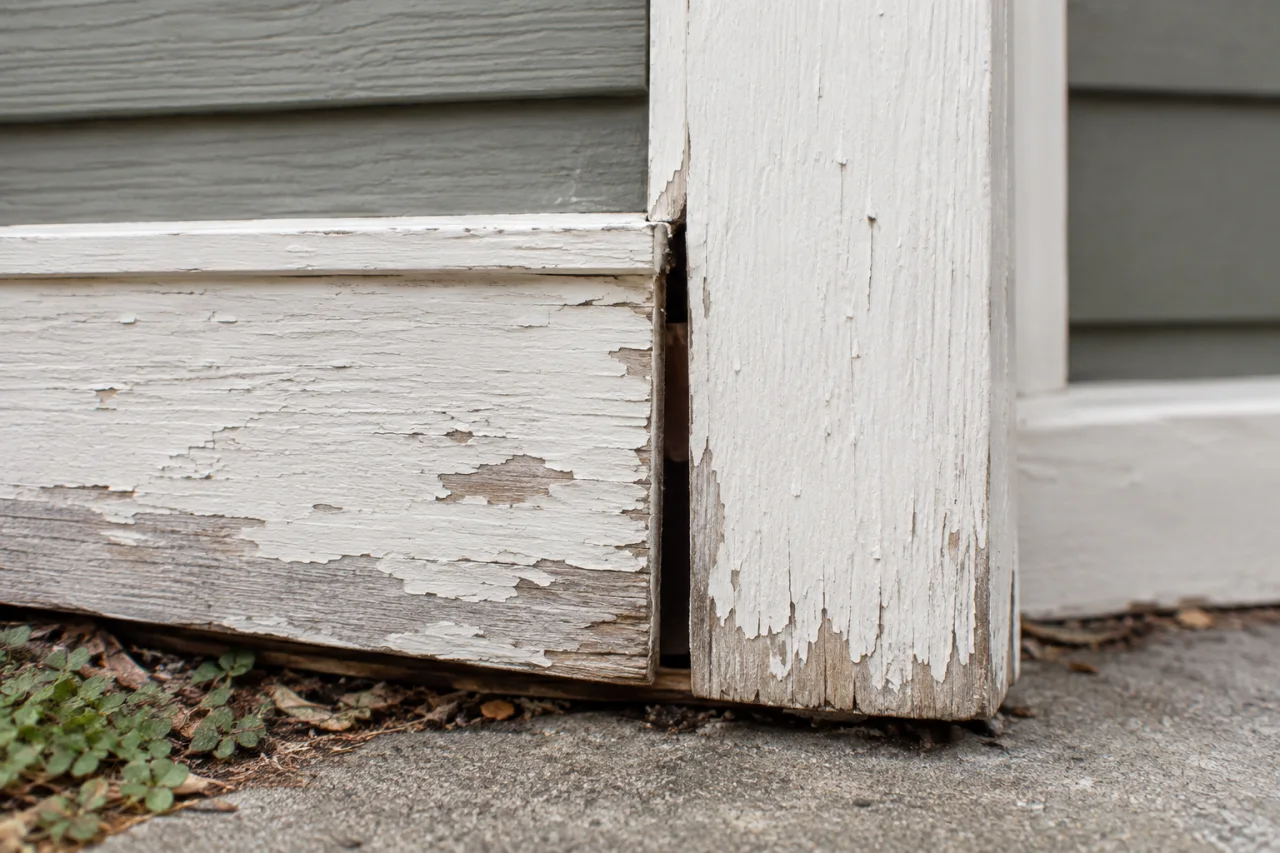
Painted trim
Filling, sanding, suitable caulking and primer get repaired surfaces ready for paint. Joints still need to line up and be smooth, even though the wood will be covered.
Contractor services · Greater Atlanta
Loose baseboards, damaged casings and open joints should be fixed before the final coat goes on. Alpharetta Painters and Stainers (Paint and Stain) handles Trim work along with wood repair, caulking and painting prep for homes and commercial properties throughout Greater Atlanta.

Recognize the repair needs
Trim is where walls meet floors, doors and windows. If those joins are loose, damaged or unfinished, a new coat of paint on its own won't fix them.
Loose baseboards, damaged edges and open corner joints stand out in an otherwise finished room. Note them before you repaint.
New flooring or wall repairs can leave gaps and uneven transitions, so the repair plan should cover the adjoining surfaces and existing trim profiles.
Soft wood and paint that keeps failing need more than a cosmetic touch-up. Check for deterioration and moisture before you pick a finish.
Profiles, joints, and finishes
Plan trim work around the shape and condition of the material and the finish you want. Wood repair comes in where sections are damaged. Caulking raises its own questions: which joints are stationary enough for it, and whether it works with the paint. Talk through existing profiles, thicknesses, corners and how the trim is attached before choosing repair or replacement. A clear scope keeps fitting work separate from surface prep and painting, and sets realistic expectations for how new sections will meet the old trim.
Go over where the trim is, its existing profiles and the finish you want. Could attachment, alignment, surface damage or moisture affect the plan?
Ask which sections need repair and which need replacement, and whether related wood repairs, joint treatment and painting are listed as separate scope items.
How will replacement sections meet the adjoining profiles, thicknesses and corners? Ask whether matching the existing trim is practical.
Talk through the filling, sanding, caulking and primer that suit the materials and the finish you want, and which joints or surfaces need work before finishing.
Finish planning
Decide on the finish early, because it changes how repairs and replacement sections should be planned.
Filling, sanding, suitable caulking and primer get repaired surfaces ready for paint. Joints still need to line up and be smooth, even though the wood will be covered.
Repairs can show through stain, so the look of the wood and the filler you use both matter. Settle the replacement material and the stain before prep starts.
Clearly defined projects
The estimate depends on total trim length, the number of corners and openings, profile and material matching, and how much is repair versus replacement. Existing coatings, prep work, access height and protecting nearby surfaces also play into the scope.
Alpharetta Painters and Stainers (Paint and Stain) gives customized, itemized estimates, so you can choose work room by room or project by project. When you send an inquiry, describe where the damage is, what you can see, and whether you want paint or stain. Ask for trim repairs, replacement sections and finishing to be listed separately.
Preparation tip
With Greater Atlanta's humid summers and frequent rain, exterior wood trim should be checked for moisture. Look at exposed joints and end grain before repairs and finishing. Caulking over soft wood covers the deterioration without fixing it.
Where sound, firmly attached painted interior trim meets the wall with a small gap, clear out loose material and dust, then run a thin bead of paintable caulk. Let it dry as the product directs before painting. Don't caulk over soft wood or block window drainage openings, and have recurring moisture looked at first.
Sound trim with localized dents, open joints or loose spots may be repairable. Split, missing or deteriorated sections may need replacing. Either way, the scope should account for the wood's condition and any moisture issues before finishing.
A match depends on the profile, thickness, material and adjoining corners as well as the length. Point out the existing trim during the assessment so matching can be written into the estimate. Don't count on an exact match until those details are checked.
Yes. Customized, itemized estimates let you pick work room by room or project by project. List where the trim is, what needs repair or replacement, and whether you want paint or stain, so each part of the scope is clear.
Depending on its condition, painted trim may need securing, filling, sanding, suitable caulking and primer. With stained trim, the look of the wood and which filler works with it matter more, since repairs can show through the finish.
When wood is soft or paint keeps failing, both the damaged section and the moisture source need to be assessed. Paint and caulk shouldn't be used to cover deterioration, and window drainage openings have to stay clear.
Free estimates across Greater Atlanta
Tell us which rooms, cabinets or exterior features you want to refresh, where the property is and any damage you've spotted. Then request a free estimate, and we'll talk through prep, finish choices and a scope that fits your priorities.