
Drywall Finishing in Lilburn: Blend the Patches or Skim the Whole Wall?
Decide whether scattered old patches need localized finishing or a full-wall skim coat, and define the preparation scope before repainting.
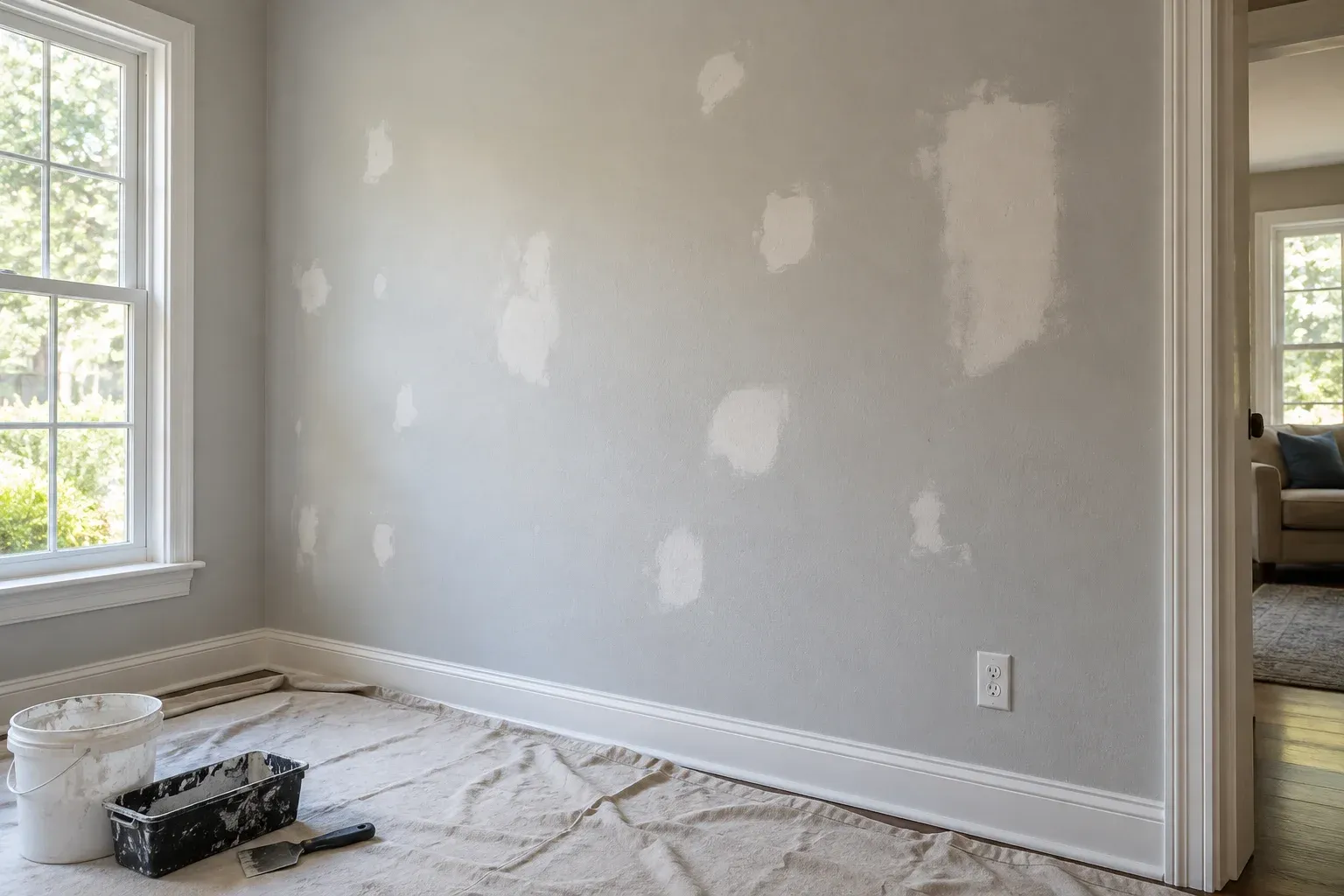
Start with the wall, not the paint color
Drywall finishing in Lilburn often starts with a familiar question: can a wall’s old patches be blended individually, or should the entire surface receive a skim coat before repainting? For a long-term homeowner, the answer matters beyond the next coat of color. Repairs from removed shelves, relocated fixtures and earlier damage can leave a wall that looks acceptable head-on but uneven beside a window.
The useful comparison is not simply small job versus large job. It is whether localized work can produce a consistent surface under the lighting and paint finish you actually intend to use. Patch distribution, existing texture and the condition of the underlying wall should guide that decision.
Read the pattern of repairs
Count the patches, but also look at where they sit. Three isolated repairs with plenty of sound wall between them may be straightforward to blend. The same number clustered around a former wall-mounted television can create overlapping ridges and texture changes. A broad repair near a window may be more noticeable than several smaller ones in a less exposed part of the room.
Inspect for raised edges, shallow depressions, sanding scratches and smooth spots against textured paint. These are different problems, even when they all resemble a visible patch. A raised edge needs leveling; a depression needs filling; a texture mismatch needs a plan for the surrounding surface. General drywall finishing addresses the final surface, but loose material, recurring cracks or moisture damage must be evaluated before cosmetic blending makes sense.
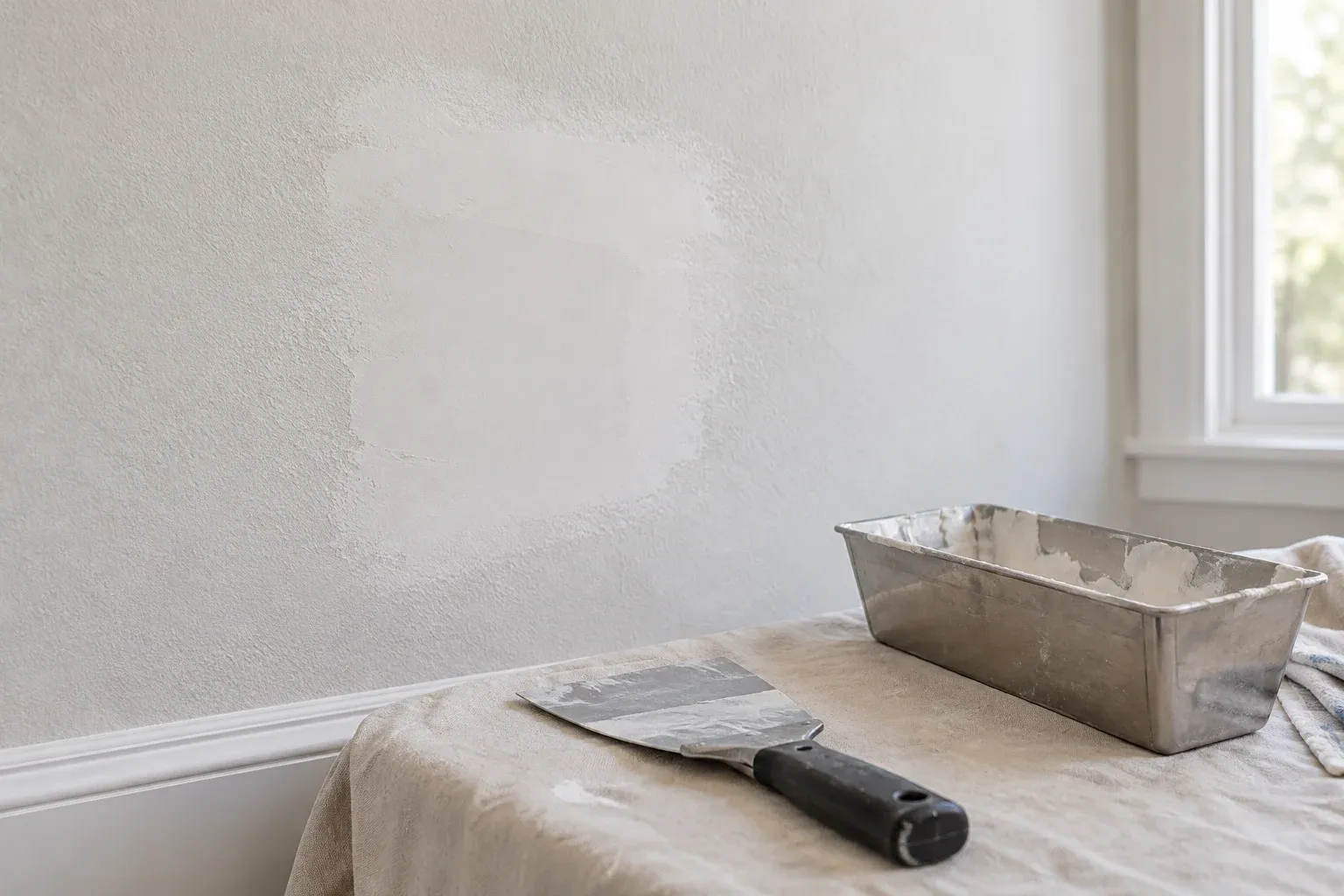
When localized finishing makes sense
Localized finishing is a reasonable option when the existing surface is sound and fairly consistent. The repair area is filled and feathered outward so the transition is gradual rather than abrupt. The finished footprint will usually be wider than the original hole or blemish. Keeping compound strictly inside the damaged spot can leave an edge that becomes obvious after painting.
Texture is often the deciding detail. A flat repair in a wall with years of roller stipple can look like a smooth island, even when its edges are level. Conversely, a heavily textured repair can stand out on a relatively smooth wall. Ask how the repaired areas will relate to the existing finish. Localized work is most persuasive when both the shape and texture transitions can be made unobtrusive without repeatedly expanding across the wall.
When a full-wall skim coat earns its place
A full-wall skim coat applies a thin layer of finishing compound across the surface to establish a more continuous finish. It becomes worth considering when patches are distributed from end to end, broad repair edges overlap, or previous work has left alternating smooth and rough areas. Rather than treating each transition separately, the scope addresses the wall as one visible plane.
Skimming is not a substitute for repairing an unstable wall, and a thin coat cannot straighten major framing irregularities. Existing paint must also be suitable to receive the proposed materials. Significant texture may need additional preparation before skimming. Clarify whether the goal is a smooth surface or a uniform texture afterward: smoothing one wall can create a noticeable contrast with adjacent textured walls. Corners provide useful stopping points, but the visual relationship still deserves discussion.
Judge the finish under real light and the intended sheen
Window light can change the decision. Light traveling across a wall at a shallow angle casts small shadows along ridges and depressions. A wall that looks even under an overhead fixture may reveal old patch outlines in afternoon sunlight. Evaluate it at more than one time of day and from normal seating or walking positions, not only while standing directly in front of it.
Paint sheen adds another variable. More reflective finishes generally make surface differences easier to notice; flatter finishes can reduce their visual emphasis but do not remove them. Choose sheen for the room’s use as well as appearance. A washable finish may matter in a busy family space or a business owner’s consultation office. If that choice increases reflectivity, discuss a correspondingly more demanding surface-preparation scope rather than expecting paint to conceal unevenness.
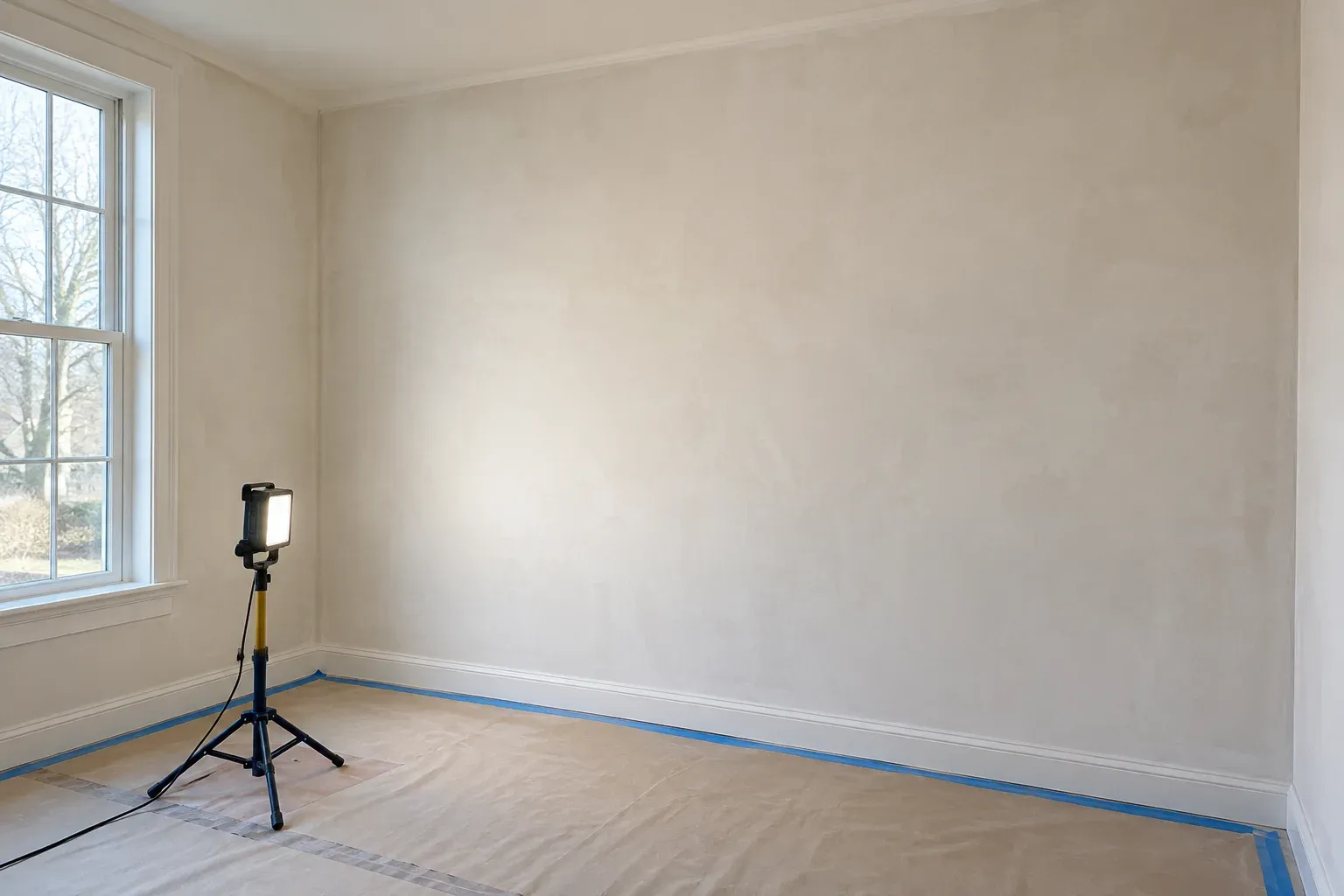
Do not ask primer and paint to do the leveling
Primer and paint serve different purposes from finishing compound. Primer helps prepare the surface for coating and can reduce absorption differences between exposed compound and surrounding paint. Those differences can cause repaired areas to appear duller or otherwise distinct, a condition often called flashing. Primer selection and coverage should suit the substrate and the coating system, rather than being treated as a universal remedy.
Neither primer nor ordinary wall paint levels meaningful surface irregularities. A raised patch edge remains raised after coating; a hollow remains a hollow. Additional coats may change coverage or sheen without correcting either problem. Before interior house painting, define the physical finishing work separately from priming and painting. That distinction makes it easier to compare scopes and understand whether a proposal addresses texture, absorption, surface shape or all three.
Questions to settle before painting begins
Define the scope by wall, not just by room. One heavily patched wall may justify a continuous skim coat while the remaining walls need only isolated repairs. Identify the stopping points, the intended texture and any areas that need underlying repair. Also distinguish repainting the whole wall from skimming the whole wall: localized preparation can still be followed by corner-to-corner painting for a more consistent coating appearance.
For a long-term homeowner, the most useful estimate explains what appearance the work is intended to achieve and what limitations remain. Ask whether a representative prepared area can help settle uncertainty about texture or sheen, and agree on how the surface will be assessed before final coating. Discuss access, furniture protection and cleanup as project requirements rather than assumptions. A clearer finishing scope is more useful than comparing totals for proposals that treat the same wall differently.
- Which areas need underlying repair before finishing?
- Will localized feathering areas overlap enough to favor a full-wall skim coat?
- What texture should remain after preparation, and where will the work stop?
- How will window light and the chosen paint sheen affect the expected appearance?
- What priming, repainting, protection and cleanup are included?
Choose the scope that fits the wall in Lilburn
Choose localized finishing when the repairs are contained and the surrounding surface offers a realistic match. Consider a full-wall skim coat when widespread patches or inconsistent texture make individual blending less convincing. Neither approach should be selected without accounting for the wall’s condition, lighting and intended coating.
When discussing your project with Alpharetta Painters and Stainers (Paint and Stain), describe the result you want, not just the number of patches you see. A clearly defined scope for drywall finishing in Lilburn helps keep preparation decisions focused on how the repainted wall will look in everyday use.
Frequently asked questions
Do several old patches automatically mean the whole wall needs a skim coat?
No. Separate, flat patches surrounded by sound, consistent texture may be suitable for localized finishing. A full-wall skim coat becomes more useful when repair areas overlap, texture varies across much of the wall, or side light makes repeated transitions conspicuous.
Can primer or another coat of paint hide raised patch edges?
Primer can help equalize absorption, and paint supplies color and sheen, but neither levels raised edges or fills meaningful depressions. Those physical irregularities need finishing work before coating.
Should a skim coat continue around the entire room?
Not necessarily. One problem wall can sometimes be finished from corner to corner while adjacent walls receive localized preparation. Agree on the intended texture, stopping points and appearance at the corners before painting begins.