Waterproofing in Alpharetta: How to Compare Exterior Masonry Coating Proposals
A practical guide to comparing exterior masonry coating proposals by scope, compatibility, appearance, and responsibility—not product names alone.
Compare the Work Behind the Product Name
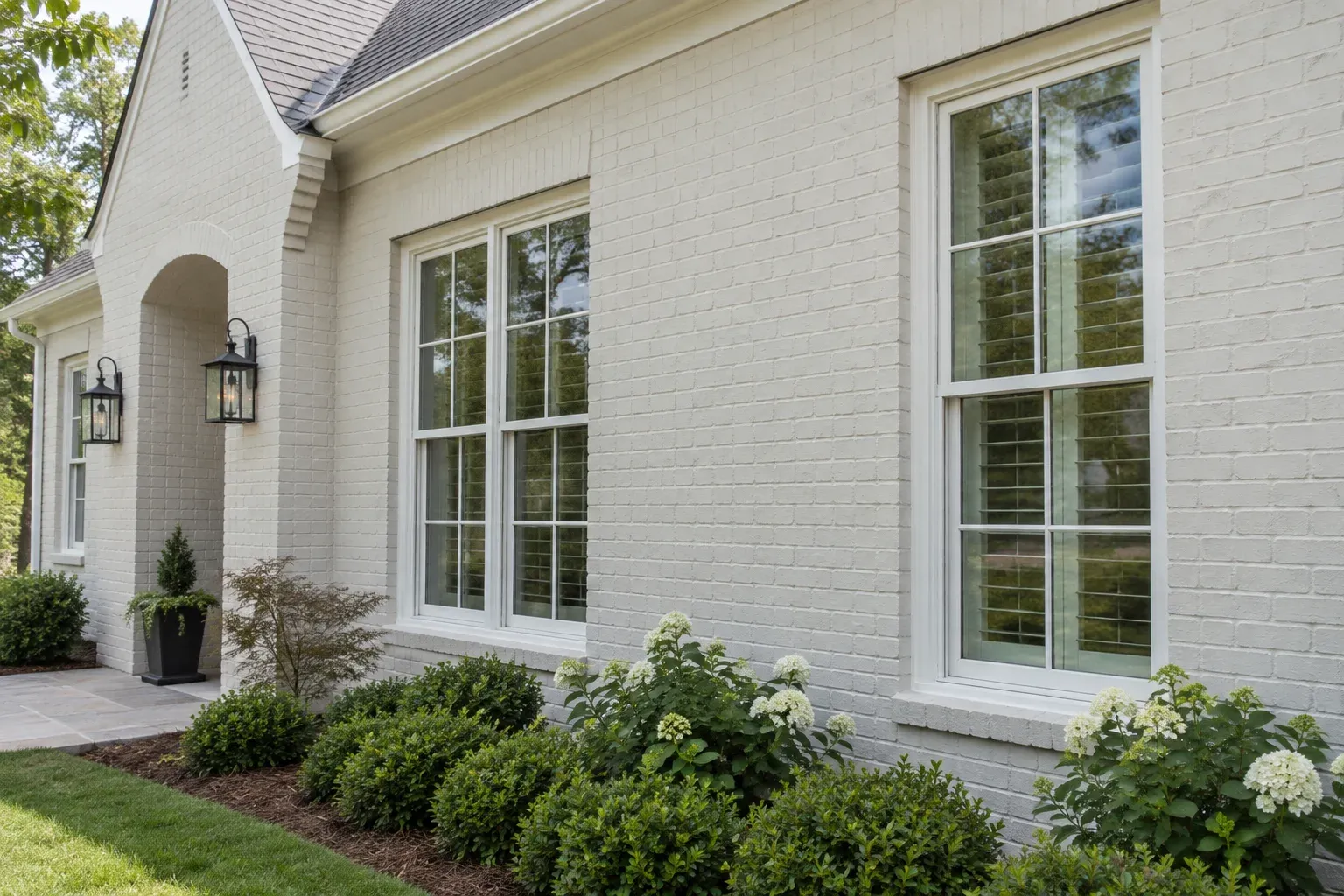
Comparing Waterproofing proposals in Alpharetta takes more than checking which coating brand appears beside the total. Two estimates can name similar products while allowing very different preparation, joint treatment, and finished coverage. For a homeowner planning to stay, those differences deserve attention before color selection. The useful question is whether each proposal describes the same wall conditions, treats the same surfaces, and assigns responsibility for problems a coating cannot correct.
Start by separating the Waterproofing coating scope into three parts: preparing the existing surface, treating specified cracks and material junctions, and applying the coating system. Keep those categories separate while reading each estimate. A detailed product description does not make up for an undefined preparation allowance, and extensive caulking does not establish that the selected finish is compatible with the wall. Compare the complete assembly of work rather than its most recognizable ingredient.
Establish the Starting Surface and Treatment Boundaries
A useful proposal identifies the substrate rather than calling everything masonry. Brick, concrete block, poured concrete, and stucco can require different preparation and primers. It should also describe whether the surface is bare, previously painted, patched, or treated with an unidentified sealer. If the existing finish is unknown, ask how compatibility will be established and whether testing, additional preparation, or removal would change the agreed price before application begins.
Treatment boundaries should be equally specific. Identify elevations, returns around corners, porch walls, columns, and recessed areas, preferably with marked photographs. At mixed-material sections, distinguish masonry coating from adjacent siding or trim work. The appearance questions discussed in matching replacement siding illustrate why a finish boundary matters: a technically separate repair can still affect the overall facade. Do not assume neighboring materials receive treatment simply because they appear in the same photograph.
Separate Surface Preparation From Washing
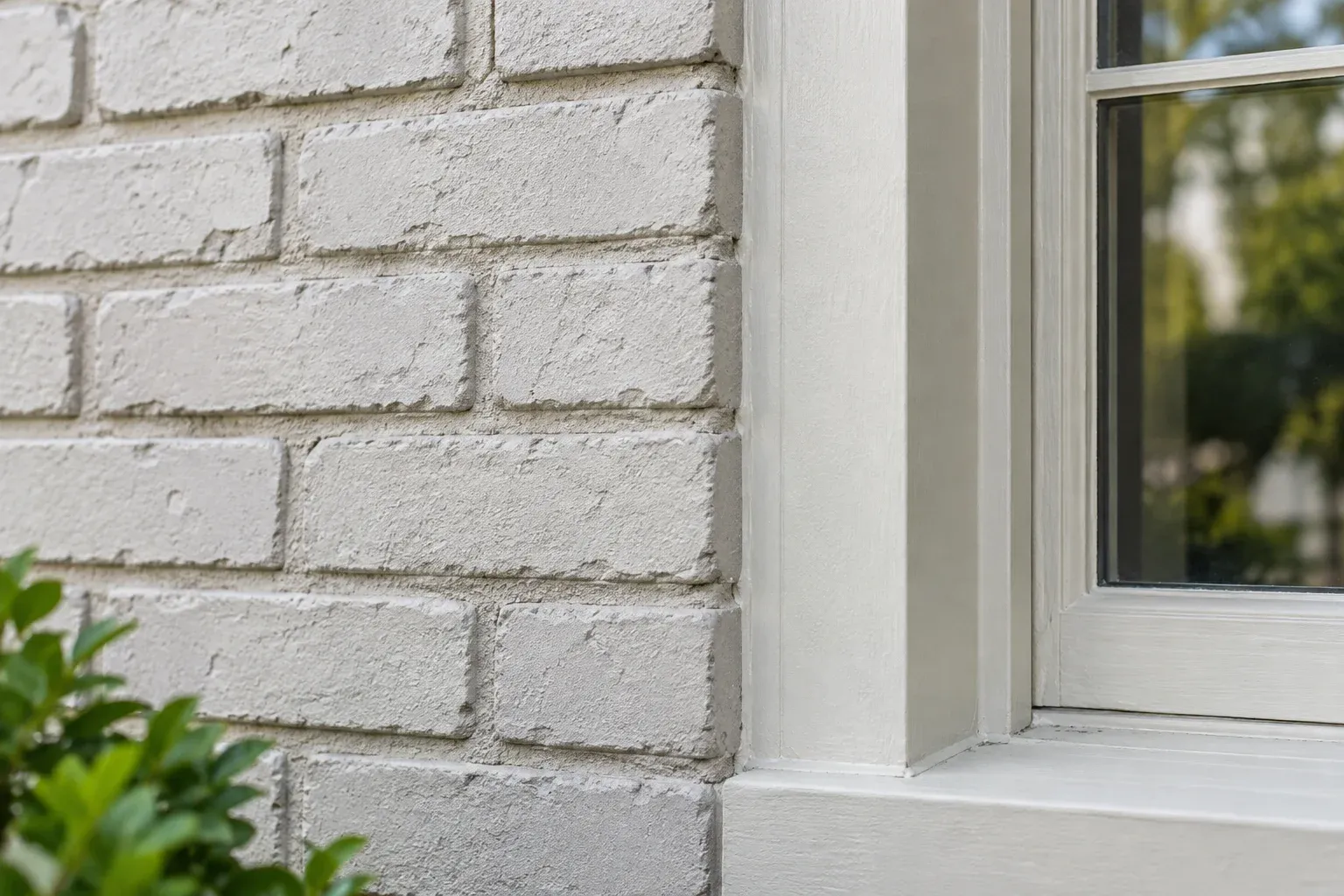
“Clean and prepare” leaves too much room for interpretation. Ask each bidder to identify the conditions included: dirt, biological growth, chalking, loose paint, salt deposits, and deteriorated surface patches. The appropriate method depends on the material and its condition; more aggressive cleaning is not automatically better. The proposal should explain the intended result—a sound, clean surface ready for the specified system—without treating washing alone as proof of readiness.
Drying and compatibility also belong in this discussion. Sherwin-Williams' surface preparation guidance calls for dry, sound surfaces and addresses test patches over previously coated materials. Ask what checks are appropriate for your wall and what happens if the existing coating fails them. Where recent patches are present, request the applicable curing and preparation requirements. A calendar date should not override the selected coating manufacturer's requirements for substrate condition or application weather.
Define Localized Joint and Crack Treatment
Localized treatment needs its own description. Ask which cracks, mortar defects, and transitions between materials are included, which products are specified, and what conditions fall outside that treatment. A coating's ability to bridge small cracks is not permission to coat every opening. For example, Benjamin Moore's Flat 359 technical data sheet distinguishes minor cracks from wider openings that need separate preparation. Those instructions apply to that product, not every masonry finish.
At windows and trim, clarify where sealant treatment ends and coating begins. The proposal should not imply that every visible gap should be filled; drainage openings must remain functional. Ask whether failed sealant removal, joint preparation, and compatible replacement are included where required. If deterioration appears beyond the visible junction, use the same written change process emphasized in planning for concealed siding damage: document the finding and approve additional work before proceeding.
Compare Complete Coating Systems
The coating specification should identify the exact product, sheen, required primer or filler, number of coats, and intended application thickness or spread rate. “Two coats” alone does not describe equivalent material coverage across different systems. Porous or textured masonry may affect consumption. Ask how the proposed application will meet the manufacturer's requirements, including filling surface voids where necessary, rather than relying on the product name as a complete performance specification.
Compatibility must extend through the system: existing finish, patching material, sealant, primer, and topcoat. If one proposal omits primer, ask for the product-specific reason rather than assuming an omission is wrong. Some systems permit direct application under stated conditions; others require substrate-specific preparation or priming. Compare each proposal against its own documentation. Requirements from one manufacturer's elastomeric coating should not be transferred casually to another product, even when their marketing descriptions sound similar.
Approve Texture and Sheen Before Full Application
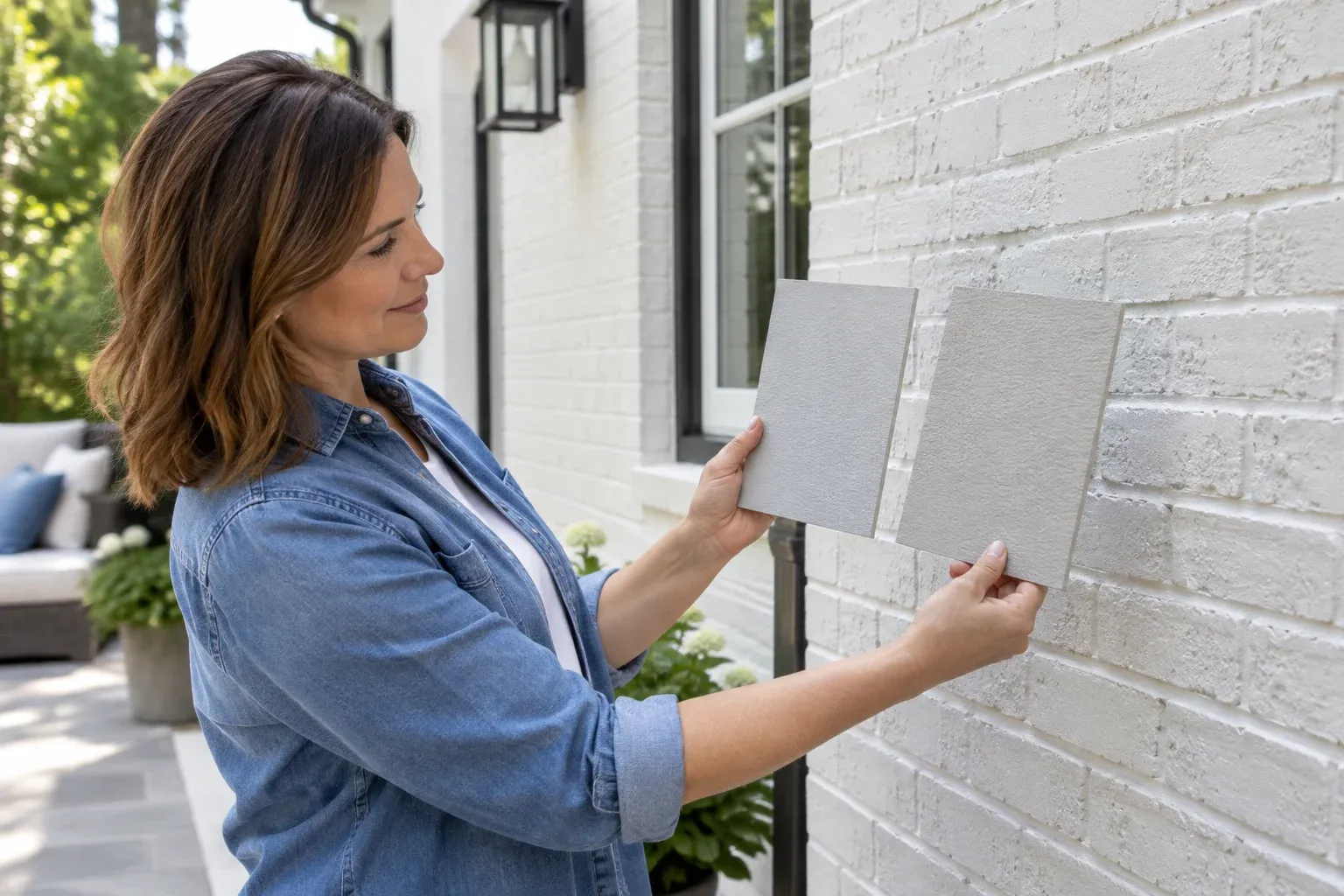
Water-resistant performance and visual results are separate approval questions. A high-build finish may change the apparent texture of brick faces, mortar edges, and repaired areas. Flat and low-lustre finishes also reflect light differently. Ask for a representative sample that includes typical texture and a repair if possible. Preserving painted trim detail raises a related concern at adjacent moldings: added coating should not casually obscure features you intend to keep visible.
Review the sample from normal viewing distance and in both direct and shaded light. Record the approved color, sheen, texture, and sample location. The discipline behind reviewing a sample door is useful here, although masonry needs its own representative sample rather than a smooth cabinet-style panel. Ask whether localized repairs will remain visible and whether coating an entire defined wall plane is included to avoid an unexpected patchwork appearance.
Resolve Exclusions Before Comparing Final Totals
Read exclusions as carefully as inclusions. Exterior masonry coating is not a substitute for correcting defective flashing, roof leaks, structural movement, or concealed moisture sources. Ask which unresolved conditions would pause coating work and who must address them. This boundary matters when interior staining is also present. A paint-ready handoff after water damage should establish that prerequisite repairs and drying are addressed separately, rather than treating fresh exterior coating as proof that the source is resolved.
Before choosing, request written clarification wherever proposals differ on boundaries, preparation, joint treatment, coating build, appearance, or exclusions. Separate required work from optional appearance upgrades, then compare totals for equivalent scopes. Keep the accepted proposal, product documentation, approved sample details, and any changes together. For Waterproofing in Alpharetta, a clear decision rests on knowing what the coating system is intended to do—and what remains outside its responsibility.
- Confirm the substrate, existing finish, and exact treatment boundaries.
- Compare preparation, localized treatment, and coating application separately.
- Approve a representative sample and document appearance expectations.
- Resolve exclusions and additional-work authorization before accepting a proposal.
Frequently asked questions
Are two proposals equivalent if they specify the same masonry coating?
Not necessarily. Compare the preparation, primer requirements, joint treatment, application thickness, treatment boundaries, and exclusions. The same finish product can be part of substantially different scopes.
Will an exterior masonry coating stop every moisture problem?
No. A coating addresses only the conditions and surfaces covered by its specified system. Water entering through defective flashing, concealed assemblies, or other sources requires separate attention.
Should I approve a color chip or a masonry sample?
A color chip can narrow the choices, but a representative masonry sample is more useful for judging texture, sheen, and patch visibility. Confirm that it represents the proposed preparation and coating system.